May 20, 2026
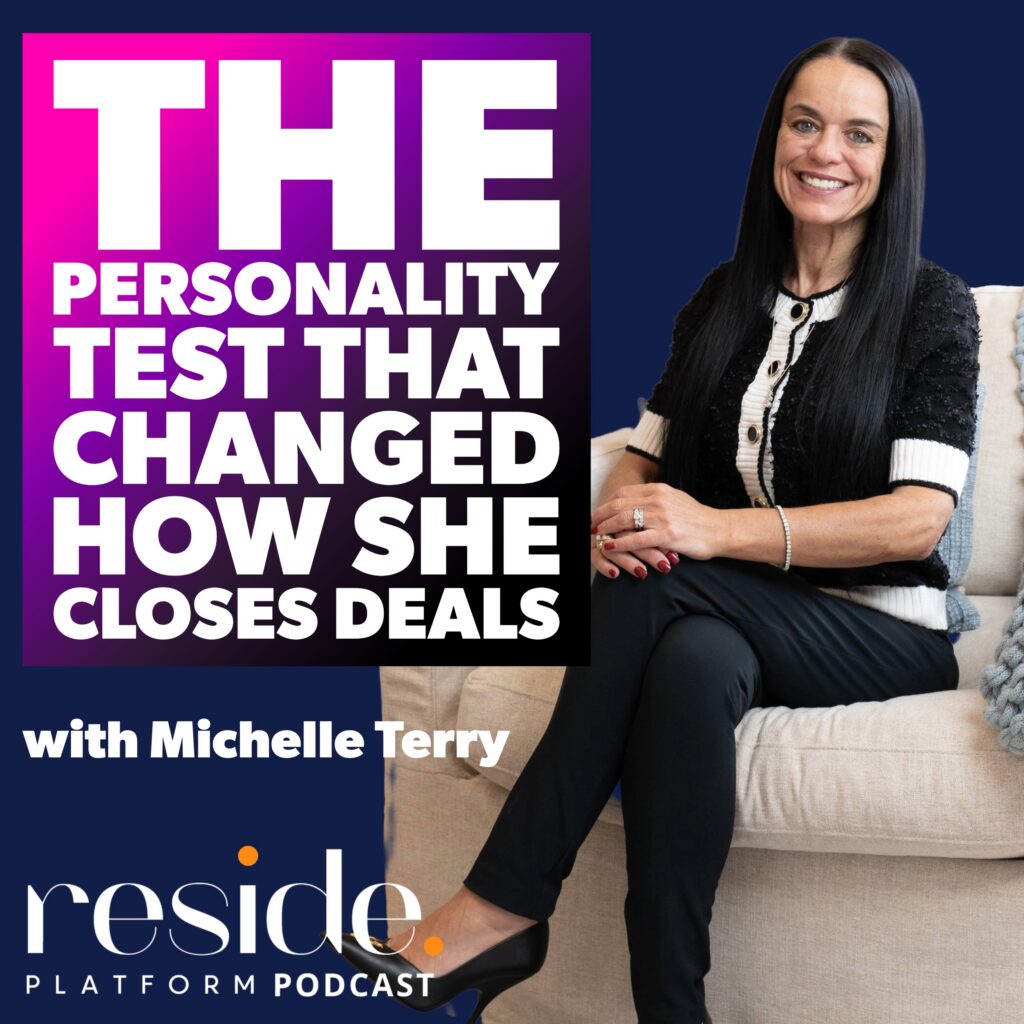
Suneet Agarwal sits down with Michelle Terry, a 28-year real estate veteran, broker, and owner of the Michelle Terry Team spanning Massachusetts and Connecticut. Michelle shares her origin story of building a house at 19 and falling in love with the process, how she pivoted to dominate the short sale market during the 2008 crash — closing over 100 short sales in a single year — and why the agents who refuse to pivot are the ones who leave the industry. She breaks down her journey from being coached by Buffini & Company to becoming a DISC Profile certified trainer, explaining how understanding personality wiring systems transformed the way she leads her team and connects with clients. Michelle and Suneet also dive into the power of handwritten notes as a relationship-building tool, how she uses AI to analyze home inspections and save tens of thousands on flip projects, and why coaching and mentorship are non-negotiable at every stage of your career.
Chapters:
- (00:00:00) – If You Don’t Have a Mentor, You Need a Coach
- (00:00:42) – Michelle Terry’s Origin Story: Building a House at 19
- (00:02:14) – Pivoting to Short Sales During the 2008 Crash
- (00:04:00) – Why Agents Who Don’t Pivot Leave the Business
- (00:06:12) – From Being Coached to Becoming the Coach
- (00:09:02) – The Power of Handwritten Notes in a Digital World
- (00:13:15) – Becoming a DISC Profile Certified Trainer
- (00:18:10) – Using DISC to Read Clients in Real Time
- (00:20:30) – DISC for Team Leadership and Avoiding Conflict
- (00:27:00) – How AI Saved $67K on a Flip and Revolutionized Her Business
- (00:31:45) – Advice for Agents and Team Leaders in Today’s Market
Links and Resources:
- Website
- Michelle Terry on LinkedIn
- Team Leader Secrets by Suneet Agarwal
Thanks so much for joining us this week. Want to subscribe to the Reside Platform Podcast? Have some feedback you’d like to share? Connect with us on Spotify, Apple Podcasts and YouTube to leave us a review!
KEY QUESTIONS ANSWERED —
Read More
Q: How did Michelle Terry get started in real estate, and what was her first big pivot?
A: Michelle began her real estate journey after building her first house at 19 and falling in love with the process. She started out focusing on new builds and working with builders, but when the market slowed in the mid-2000s, she pivoted by taking a course on short sales. This allowed her to become a local expert and help her community through tough times.
Q: What’s Michelle’s approach to adapting when the market changes?
A: Michelle stresses that agents must always be ready to pivot. She believes what works today might not work next year, so it’s crucial to pay attention to market shifts, seek out new knowledge, and bring fresh ideas back to your own business to stay ahead.
Q: How does Michelle use coaching and mentorship in her business?
A: Coaching and mentorship have always been important to Michelle. She recommends getting a coach or mentor as soon as possible, not just later in your career. Coaches provide structure and accountability, while mentors offer guidance and support when they can.
Q: What’s the difference between a mentor and a coach?
A: According to Michelle, a mentor gives advice from the heart and helps when they’re able, but there’s no set path. A coach, however, has a direct system and a clear plan to help you progress and achieve your goals.
Q: Why does Michelle still use handwritten notes, and what’s her process?
A: Michelle believes handwritten notes are a meaningful way to build relationships in a digital world. She keeps blank cards on her desk and commits to sending at least ten each week, ensuring they’re mailed before Friday. The notes can be for anyone she wants to connect with, from clients to colleagues.
Q: How does Michelle use the DISC profile with her team and clients?
A: Michelle uses the DISC profile to better understand both clients and team members. Every team member completes a DISC assessment before joining, and the results are displayed in the office. This helps everyone communicate more effectively by understanding each other’s dominant personality traits.
Q: Can you explain the DISC profile in simple terms?
A: The DISC profile helps identify dominant personality traits: D for Dominant/Doer, I for Inspirational, S for Supportive/Systematic, and C for Cautious/Reflective. Most people are strongest in one or two areas, and knowing this helps tailor communication and support.
Q: How does Michelle use AI in her real estate business?
A: Michelle leverages AI to save time and increase efficiency. She uses it to analyze home inspection reports, bids, and mortgage notes, which helps her spot issues quickly and save money. For her, AI is about making real business impacts, not just automating emails or social media.
Q: What advice does Michelle have for real estate team leaders right now?
A: Michelle’s advice is to hang in there and lead by example. Your team will reflect your actions, so if you’re making calls and showing up, they will too. Leadership is about setting the tone and structure for your team’s success.
THE TRANSCRIPT —
Read More
Michelle: [00:00:00] If you don’t have a mentor, you need a coach. Yeah. And even, as you progress, you should have a mentor and a coach.
Suneet: What’s up, everybody? Welcome to another episode of the Reside Platform Podcast. I’m your host today, Suneet Agarwal, and I’m hanging out with Michelle Terry. She’s a realtor, she’s a broker, and she’s the owner of the Michelle Terry team out of Massachusetts and Connecticut. Michelle, what’s going on?
Michelle: Hey, how are you?
Suneet: Good. I’m super good. so you’ve been in the business for over 28 years. You must have seen a lot of cycles and crazy stuff in that 28 years. and you’ve consistently been a diamond level top producer. So let’s get into it. [00:01:00] For agents who are listening, for listeners who are listening, and for me, I didn’t know you’d been doing this for 28 years, what’s the origin story for Michelle Terry being in real estate?
Michelle: Oh my gosh. The origin story? Suneet, I actually came from nothing, like big zero, right? Built a house at 19 years old, right out of high school, and fell in love with that process. so I fell in love with the process of building, so naturally I went and got my real estate license shortly thereafter and started building a big business with builders.
Suneet: Oh, wow. And was that in your same town that you live in now?
Michelle: Yeah. It… Well, I live in a little community. It was in the neighboring town. So my first home was in East Brookfield, Massachusetts, and now I live , one town west, which is Brookfield.
Suneet: Yeah. like, what are some of the, like, things you’ve learned about the real estate agent side, about the production side [00:02:00] in the last 28 years?
Michelle: Oh my gosh. so some of the things that, that I learned is that you have to, you always have to pivot. So what you know today, what’s working for you today may not be the same system and process that’s gonna work for you next year. you really have to pay attention to the market, pivot to , where the market’s going.
Michelle: I remember having to pivot to short sales and become the best short sale agent back in the mid 2000s.
Suneet: Oh, wow. Yeah. so like that pivot, what did you do to pivot? Did you get some education? Did you figure it out? Did you take a course? what did that look like? ‘Cause I think that’s so important.
Michelle: Oh my gosh. so yeah, I s- when I started out in the business, it was all new builds. It was new builds and anything under the sun, but that was my primary focus. And being a, developer myself, that was a big part of my business. But as the market started [00:03:00] to slow down in the mid-2000s, people were struggling, and in my area, I live in this small country area, we service about 15 towns and two major hubs, but here in this area, people didn’t know– When people were struggling, they didn’t have answers.
Michelle: Agents didn’t have answers. Back then, I went and took– I went to Delaware and took the CDPE course and learned all about short sales. I brought it back to my community, and I still do things like that today. go out, look for, what’s new, learn the material, and bring it back into my community and really leverage that.
Michelle: that was a big deal for me back in, like, 2008. And, I would say that I probably did about 100 short sales in a year.
Michelle: and we ended up breaking into that marketplace and buying a bunch of flip properties and rental properties while we were doing those short sales.
Suneet: Ah. So that’s a real coachable moment and, I [00:04:00] moonlight as a coach,you saw an opportunity, and you probably heard about the short sales happening in other places, so you traveled somewhere, learned about it, and came back. Right? And that’s so good because… And the pivoting is so good because don’t you think that, like, people just keep on trying the same old shit even when it’s getting hard?
Michelle: Yeah. Yeah. And there’s a lot of sm- what happens in our industry, I’ve seen it over and over again, when it’s time for us to make a pivot, and Sinney, you know we’re gonna make a pivot right now, right? things are changing in our worlds, and the agents that pivot will do really well, and the ones that don’t will probably be out of the business.
Michelle: I’ve brought in probably more than 120 real estate agents into this business, and it created some competitors, created, some longtime team members, and I’ve seen a lot of people just give up, too, and not pivot, not really dig [00:05:00] into what the needs are for today’s market and leave the industry.
Suneet: And then, like, I remember when I first was in my first office, there was, like, some, like, more older school agents, right? And, they were still trying to do the same thing that had worked. Like, they were still trying to do short sales in, like, 2016. Right? And they were struggling for business ’cause there wasn’t many short sales by that point, right?
Suneet: they were still, like, chasing the old REO, asset managers when the asset managers barely had anything to d- do. So I think that’s for everybody listening, right? And that’s how we met from you joining r- the Reside platform because you saw something and you wanted to be educated, so you went to that room, right?
Suneet: We were talking ab- before we started about, going to the KFR event, right? I think it was the first time we met in person, right? because you saw that recruiting or you saw that we had a different vibe with the recruiting than, like, the typical, [00:06:00] and you went in. let’s talk about coaching too, ’cause I know that you have a lot of experience there.
Suneet: What’s your journey from being coached to being a coach and to where you are now look like with coaching?
Michelle: Yeah. So coaching was always important to me. I remember being a young agent and I went over to the Buffini & Company, right? Learned all about, notes, sh- relationships and whatnot.
Michelle: So I started out there. ,so coaching has always been a big part of my business, and from there I elevated to another company that really focused on systems and processes. I did that for quite a while, and that was, started with that company in 2017. Really wanted to develop systems and processes, but what really attracted to me to r- Reside was the action taking.
Michelle: You know, a lot of coaches will talk about stuff and tell you what to do that… And sometimes they’re not doing it, they’ll tell you what to do. But I watched everybody [00:07:00] through Reside and this community, I watched everybody actually taking massive action, and that was resonating with me rather than telling somebody to do something that you’re not even doing yourself.
Suneet: Totally. Totally. thank you for that compliment. because that is a huge compliment. That’s something that I’m serious about is taking action, right? Like you’ve heard my origin story. I could still be spinning my wheels on some bullshit if it wasn’t for the action-taking and environment that I put myself in.
Suneet: When do you think is a good time for anybody, maybe not even in real estate, to explore getting coached?
Michelle: Immediately. Right out of the gate. If you don’t have a mentor, you need a coach. Yeah. And even, as you progress, you should have a mentor and a coach.
Suneet: Absolutely. what do you think is the difference between a mentor and a coach?
Michelle: Well, a lot of times a mentor is giving from their heart, they’re just helping. they’ll help when they can. And a coach [00:08:00] will have a direct system to be able to put you on a path of progression. and that’s just, it’s what they do. it’s, there’s a system built around it.
Michelle: Where a mentor is just answering some questions here and there, they might help you if you call, but there’s really not a direct path.
Suneet: Yes. I mean, like, and I’m sure you can remember some, big mentors in your life. I can too, and I’ve had ’em through different, different iterations of different things I’m doing, right?
Suneet: Like, sometimes… and even a coach, like a coach could be a therapist. Yeah.
Michelle: I lear- I learned that early on that, it’s funny. Sydney, coming to you guys, I couldn’t fathom that you could do a coaching call in 20 minutes, right? Until I understood that if your coaching calls are directed around action, they shouldn’t take more than 20 minutes.
Michelle: Now, sometimes I’ll- Yeah, they shouldn’t take more than 10 … 17 minutes, right?
Suneet: Yeah. yes. Well, we have a call next week, I think,so we’ll see. But,
Suneet: good. [00:09:00] What were some of like the lessons that you remember from those early coaching days with Buffini? Like, let me say, I’m a big fan of Buffini and his systems.
Suneet: I love… It’s so funny, last night I was thinking about
Suneet: it. I love those handwritten notes. I love
Suneet: that analog style, especially in this AI online world. Do you still do any handwritten notes?
Michelle: Yeah. I definitely still do handwritten notes. I actually had a conversation with my team about this morning.
Michelle: we’ve done some traveling lately, and we’ve met some incredible people, and building the relationship, whether it’s with your buyers, or sellers, other real estate agents, or anybody that you’re looking to build a relationship with, if you take a couple minutes and just really come from the heart and write a note to them, that’s gonna go a long way.
Michelle: It’s not AI, it’s not a quick, voice text or an email. It’s literally you’re [00:10:00] taking your time, dropping it in the mail, and send it to them. It’s meaningful. So I still 100% believe in handwritten notes.
Suneet: I wanna write more notes. What should my process be?
Michelle: So your process should be to have them sitting on your desk on Monday, and do not leave on Friday until they’re all in the mail.
Michelle: Like, don’t let them stack up.
Suneet: O- okay, good. and what do I write?
Michelle: Anything. send out at least two a day, so if you do 10 a week, that’s- perfect. It could be, I’ve written handwritten notes. I’ve had, like my kids have had a doctor appointment, and I was just really connected with the doctor, or the doctor helped a lot, so just thanking them, taking a minute to thank them.
Michelle: yeah, could be a hairdresser. It could be, sellers. So many times when you go to do a CMA, people are just looking for the business, the transaction. Take a [00:11:00] minute and thank them for letting you into their home.
Suneet: Yeah. Yeah. And then what do you do? So just… is… Do you put a business card in there for the doctor, or you just send it?
Michelle: You know what, Cindy? I don’t.
Suneet: Yes. And I was hoping that… Yes. I was hoping you would say that, right? It’s not always like, don’t be like that, the cliche realtor from the TV show, right? Yeah. Like, kinda like what,John’s been talking about a lot lately, like the relationship equity.
Michelle: Yeah.
Michelle: And I’ll tell you, I think one of the problems in our industry right now is so many agents have gone to being all transactional and not deepening the relationships. I’ve caught myself doing that. you get really busy. You wanna build a relationship. You like the people. I always say it’s the only business that you can be in where you’re divorced every six weeks, right?
Michelle: you’re with them every single day. You’re talking to them on the phone. You just really like them, but new business comes, [00:12:00] and you want to stay connected, but you’re busy doing the new business. Well, if you build a system or a couple of systems behind the relationship, that doesn’t happen. You can stay connected long term.
Suneet: Yes. And if the system is just send out 10 cards a week that are laying on your desk-
Michelle: Yeah …
Suneet: oh my God, you are inspiring me so much right now to send some notes out today. don’t be surprised if you get a handwritten note fr- from me. Do you get, like, special cards, or you just get whatever?
Michelle: So we buy boxes of 100 on Amazon, and they have all different covers, the all different, all, for all different, reasons.
Michelle: I buy cards everywhere. If I go to one of my little shop in stores is the Lilly Pulizer store. If I see a little cute little handwritten note, blank notes, I’ll pick ’em up, so I have tons of them.
Suneet: Oh, I love that. I’m gonna totally do this. Good. I
Suneet: hope
Suneet: you do.
Suneet: Hold me accountable because,
Suneet: And I’m saying it [00:13:00] live for everyone to listen to. I will be sending
Suneet: a handwritten… now I’m getting anxiety, but I will send 10 cards a week.
Michelle: Yes, absolutely. Okay. Well, I’m gonna be checking. So 10 cards. You, that means you should have four by the time we get on our coaching call next week.
Suneet: Okay. O- okay. I will do it.
Suneet: I will do it. so- You are a DiSC Profile certified trainer. Yes. how did that come about? ‘Cause I think back in the d- or maybe a decade, 20 years ago, the DiSC Profile was talked about a lot. I feel like the talk about the DiSC Profile has diminished now, and mostly because, I don’t know, it’s hard, right?
Suneet: Like, it’s not like something you can just read a book and learn, right? So how did you become a DiSC… What got you interested in becoming a DiSC certified trainer?
Michelle: [00:14:00] You really want me to tell you that? Yes. Okay. All right. So I’ll tell you how I became a DiSC certified, a, d- DiSC certified. So what really happened is I’d hear about it and I’d read a couple books about it, and it was intriguing to me.
Michelle: So I was approached by someone who is… And he was a, this commodore for the state police, and he was teaching DiSC. So he approached me and said, “Hey, can we do a certification class?” And I’m like, “Absolutely.” He’s like, “I’m only gonna charge you what it costs me to do the DiSC assessments, but let’s do this big huge class.”
Michelle: I do this big huge class. I fill the room, pack the room. It’s neat. Then the bill came, and I looked at the bill and I’m like, “Are you shitting me?” Because it was, like, a- astronomical. I wasn’t expecting that. So I really loved the material, and then I’m like, “Okay, well, I have all these tests that he did.
Michelle: I’m just gonna go out and do this myself.” [00:15:00] Yeah. And I tracked down the Wiley company out of Minnesota. I contacted them and I said, “Hey, I like the material. I wanna be, be a teacher.” So they s- I flew out to Minnesota, took a course for three days, and I started reading books, and I started watching videos and became DiSC certified.
Michelle: And it’s actually helped me a lot in my business, and it’s helped my team members a lot in the business too, because they can understand wiring systems and be able to talk to people the way they need to be talked to.
Suneet: so was it initially to, for your real estate business rather than, like, m- doing leadership?
Michelle: It was initially for the real estate business, 100%. I was fascinated by it, and I just kept learning, and I wanted to teach the agents
Suneet: And for those people who are listening who have never heard about the DISC profile, can you explain it to me like I’m a six-year-old?
Michelle: Okay. So the DISC [00:16:00] theory was, adopted by…
Michelle: It was something, it was a theory from Myers-Briggs, and there- Yeah … so basically the theory is that, all people have all traits, but they’re most likely dominant in one or two traits. There’s a D, and the D would be dominant, like a dominant personality, a doer. So remember D for dominant and doer. and it kind of…
Michelle: Think about a wheel spelling DISC, D-I-S-C. An I would be inspirational and, they’re just, they’re inspiring, they have integrity, they wanna be life of the party. Usually you can tell these people, a lot of them like to dress flashy, they like dressing nice, and they like bling, right?
Michelle: so that’s an I. An I, an inspiring person, can lose their focus quite often. they just wanna be the life of the party and . it’s hard for them to [00:17:00] finish things, and to remain focused. S would be systematic. you can think about, supportive, systematic and supportive for somebody that, like your administrators, they may have a high S.
Michelle: people that have a role to help people, , and they’re not doing it just because they have to, they do it because they actually want to. They wanna be behind the scenes. And then C is cautious and reflective, and the best way I can explain a C is an accountant.
Michelle: . Spreadsheets. they love numbers. If you’re working with somebody that’s high C, and you don’t give them any data, they’re not gonna have trust in you. So as a real estate agent, you’re a real estate agent. I’m a high D followed by I, right? Those are my dominant traits. But if I go do showings and I have new clients and I just push them to do it, like, “Get this offer signed.
Michelle: Let’s just go,” and I [00:18:00] don’t stop to show them the numbers or show them material or, explain why this is a good deal, I’m gonna lose them. So that’s why I think it’s important to understand that wiring system, and most people have a higher trait in two out of the four. We have all four, but like me, I don’t have…
Michelle: My S is almost nonexistent and my C is at mid-level. If I want to research, I will, but I don’t love it.
Suneet: Okay. That’s… You explained that perfectly. Thank you. That was real good context for me, ’cause I had forgotten a couple of those things, honestly. How do you use that when meeting a new real estate client?
Michelle: So I use it with the real estate clients and real estate agents. My wiring system’s been trained to pick up on traits. people that talk with their hands, they’re usually a D or an I. And then I need to identify if they’re fast talkers and direct, I know they’re a [00:19:00] D. So I don’t wanna bog those people down with details.
Michelle: I just wanna get it done. If they’re super focused and I hear them talking about entertaining and friends being important, I’m gonna focus on the great features of a house, and I’m gonna… .. give them some vision on what they can do at that property, barbecues and hosting parties, things like that.
Michelle: people that can’t make a decision, I might need to show them why it’s a good decision for them. That’s an S. And then a C, I better start digging up the research, and if I can’t do it, I need to find somebody that can help me do it.
Suneet: Wow. So within that first meeting or within that first phone call, you’re looking for signals.
Suneet: You’re probably subconsciously doing it now, right? It’s not like an intentional thing like, “Well, let me see. This person said this, so they’re this.” You [00:20:00] can just pick it up.
Michelle: Yeah. You just know if they, what their needs are. If they start asking you for electric bills, they start asking you for solar contracts, electric bills, they wanna know how much,other utilities are, ages of everything, I know that they’re a high C, and I know that I need to make sure I have all the details ready for them.
Suneet: Wow. Wow.
Michelle: And if I don’t have it, they don’t wanna work with me.
Suneet: So good. What about, the DISC profile application when being a team leader and managing agents?
Michelle: All right. So managing agents. Do you want me to tell you some things I learned the hard way? Yeah? Okay. so on the DISC scale… we only put about 25% of our faith into DISC.
Michelle: Like, people are people, and people adapt, right? So I learned the hard way that I’m a [00:21:00] 98% D. I’m a doer. I need to get things done, and I don’t like a lot of details. But I’ve learned on my team that if I have too many doers and we’re too many high Ds, we’re all gonna butt heads because we also like to do things…
Michelle: We’ll take your suggestion, but at the end of the day, we’re gonna do it our way. And if you have a full team of all high Ds, that’s my household. Like, that’s my house. You’re kinda, you’re… Everybody has their own way to do things, and you’re definitely, you’re gonna, you’re gonna cross paths once in a while.
Suneet: Yeah. So what about, like, how do we apply it though? Like, if… So we understand… let me make sure that I get this right. So based on what we talk about, and I mean, you don’t have every agent that comes in do a DISC profile, right? Mm-hmm. Yes, you do. Okay. Right. Like, w- and when do you do that?
Michelle: I do it,[00:22:00] before they’re on the team.
Michelle: So I have a DISC profile, and we actually display our DISC profiles. we display them in our team room. We do that because we want the team members, I want them to know how to approach me. I don’t wanna be in the middle of something and I’m totally focused on that. I want to help them, but I want them to understand how I’m wired, and I want them to be able to talk t- talk with me and get all the answers that they want, and I want them to do that with each other too.
Michelle: on my team right now, I have a girl that’s been with me for 10 years. she’s a big producer, and in the past, I’ve rebuilt my team a couple times. So in the past, I’ve had people come to me and say, “I don’t think she likes me.” And, “What do you mean she doesn’t like you? She loves everybody.” On the other side of the coin, she’s calling me saying, “Oh, I really like this person.”
Michelle: But they’re like, “Well, she doesn’t talk to me.” “Well, yeah, because she can’t. She’s not wired that way.” [00:23:00] So if they have their profiles with their wiring system, displayed, I would send someone to the board and say, ” why don’t you go read her, DISC assessment and you’ll understand why you feel like she doesn’t like you.
Michelle: She actually likes you a lot.”
Suneet: Wow. That’s so good you have them displayed as a reference. Brilliant. Brilliant. man, see, ,so you got me working on the cards. Now you got my brain going on DISC profile. Man, I’m gonna… You’re giving me homework for the weekend. if an agent or team leader wants to learn more about DISC, where should they start?
Michelle: So I think you can Google. there’s links on the Wiley company site. You could… I would just Google it. There’s a lot of online assessments. there’s a book the very first thing I did when I was interested in DISC is I read a book.
Michelle: It has a purple color, like, I’m sorry, a purple cover, and it’s called Personality Profiles.
Suneet: Personality [00:24:00] profiles
Michelle: Yeah, and that broke it down in a really easy way. I would read that book, and then there’s a lot of resources in the book so you can get more information. Okay. Well,
Suneet: I’m gonna write that down right after this.
Suneet: Personality profiles, the DISC. Mm-hmm. yeah, and that’s just another example, like, which I- I’m loving to learn about you is short sales were something that could increase your business. So you went somewhere and took a course. DISC profile, you saw an opportunity to get better at your business, so you went somewhere, took a course, and then became trained in it and then started teaching the course.
Suneet: Right? That’s super good. Right? And that’s how you pivot, which is full circle from what we started, is the constant education. what other, like, skills like the DISC, like even short sales, do you think a- agents… Well, do you think people, I’m not gonna just leave, say only agents, do you think [00:25:00] people should be thinking about in today’s environment, market, world, however you say it?
Michelle: So I think in today’s market, it’s really important to understand, today really finance options. we just went through, we just went through Q1, and it was a tougher market. I’m in Massachusetts. Yeah, I’m in Massachusetts. I’ve been in the business since 1997, and, our Q1… Our Q2’s looking awesome.
Michelle: Our Q1 was difficult, and being able to take a buyer and understand, 2-1 buydowns or some different programs where they can, maybe there’s, like, an ARM program that they’re doing. So I think agents really should understand different finance options and, that’s pretty important today.
Suneet: Yes. So good. So true, right? where do I learn about finance options?
Michelle: Find your favorite lender.
Suneet: Yes. I actually own a mortgage c- company, so I can just ask the guy down the
Michelle: street. Yeah, ask [00:26:00] Suneet. He’ll teach you.
Suneet: Yeah. Well, no, don’t ask me. ask my guy, Dan. Yes. because, like, there’s DSCRs and all this stuff, and what I’ve seen, ’cause I have an agent, in my organization who, solid agent, been with me for, like, 11 years, and he really figured out the DSCRs.
Suneet: His name is Tony Wayne, been with me for, like, over a decade, and talked to my, senior loan officer who works for me, Dan Herbert, and Tony’s throwing up DSCRs, like, buyers non-frigging-stop. It’s remarkable.
Michelle: D- can we talk about that for a second?
Suneet: Yes.
Michelle: Suneet, in December, I had a client in need to get out of a hard money loan, right?
Michelle: So I have a client in a need to get out of a hard money loan. They’re gonna, they’re gonna be matured very quickly, and we haven’t– The house, the h- it’s not ready to be sold yet, but he’s freaking out because, he’s freaking out because it, his hard money is coming up, and they’re not gonna [00:27:00] extend-
Suneet: It’s a good reason to freak out, right?
Suneet: Yeah.
Michelle: So I’m sitting down and I’m going to chat. So I’m going in– You know, I learned this from you, right? I’m going into chat and I’m saying, “What options does he have?” Like, I’m gonna list this house. What options does he have? I find the DSCR loan. I find the DS- He’s an investor. I find that DSCR loan and I’m like, “Holy crap.”
Michelle: Never knew that they existed. We flipped his first property into a DSCR super quick. He had the equity, he had the,he had the equity, he had the rentability, and we were able to flip him over to a DSCR. So that’s December, and if we fast-forward, I’m helping two more clients use DSCR right now with some of their investments.
Suneet: Awesome. Yeah, and it’s way, it’s great options. And, and I love what you said. You went into ChatGPT, right? So how important do you think AI [00:28:00] is in today’s world?
Michelle: I think that, I think it’s incredible, and I think that if people are not adapting to AI, they’re gonna be left in the dust, and that’s probably the biggest pivot that we need to make in our business.
Suneet: Yeah. So what is– what do you do with AI in your business besides look, use it to figure out loan options for people?
Michelle: Everything. Everything. Give me
Suneet: two of your favorite things.
Michelle: Yeah. So a couple– I’ll talk about like the real estate aspects and team members. okay. So it used to be that we would go and have a client have a home inspection, right?
Michelle: Have a home inspection. The report comes back and your client’s asking you what your recommendations are.
Suneet: Yes.
Michelle: Old school, I would print that out, I would read that 88 pages, and I would take a yellow highlighter and I would highlight all the areas of [00:29:00] concern, and then I would have to go back and I’d have to make recommendations and type a list.
Suneet: You just blew my mind. What a great use.
Michelle: So now I still read it. I skim it. Then I put the home inspection in Chat, or whichever preferred AI I’m using. So I’ll upload the home inspection. It gives me the recommendations. I give it back a couple more recommendations and I tell it, “Type me a list.” So I just took hours and brought it down to 20 minutes
Suneet: That is one of the best use cases I’ve heard for real estate agents.
Suneet: Bravo, Michelle. That’s so good. I have a couple more. Yeah. Let me hear one more. That’s such a good idea. Like, I’m over here thinking, “Damn, why didn’t I think about that?” Okay, good. So yes.
Michelle: So the next one I used, [00:30:00] we have a lot of properties, like we build houses, we flip houses, we have investments, have vacation properties, like all kinds of properties.
Michelle: So I did a little project and I pulled notes on all of them. I put all the notes in chat and asked them to give me any red flags, right? So I’m reading mortgage notes, I’m reading loan docs, I’m throwing settlement statements in, and I’m also, I just saved 67,000 on a flip by putting all my bids in too. So I upload my bids and get recommendations off the bids.
Suneet: Do you know what I love about the two things that you just said? None of them had to do with, “Oh, it helps me write emails or helps me write social media.” You’re using it to make fucking money and to save your time. Yes, add efficiency, make money, save money, [00:31:00] right? And save time. Instead of, treating it like Google, right?
Suneet: Or like, say, “Yeah, I got all my Facebook posts. I get one like and 100 views from ChatGPT,” ’cause everyone’s doing that, right? so good and so actionable. I hope people listen to that and get inspired for, uses in their AI. All right, so last couple questions. What advice do you have? And you’ve given a bunch of great advice, so if this answer is short, that’s okay.
Suneet: What advice do you have for real estate agents today?
Michelle: Coach and mentor. Coach and mentor. You– This is a tough time in the business, and you have to, don’t waste all your time making Canva posts. Don’t waste all your time controlling social media. You have to take action and have a mentor and a coach to be able to hold you accountable and help [00:32:00] you move forward, because it’s not easy right now.
Michelle: It’s a tougher market.
Suneet: And there’s always circumstances that don’t make something easy, right? Like, when the market’s good, what’s happening? There’s 40 offers on everything and it’s going 100 grand over list, right? mentorship and coaching has no doubt 100% changed my life, right? In every aspect. o-okay.
Suneet: So what advice do you have- And if it’s the same advice, I wouldn’t be mad at you, but let’s try and make it different ’cause that first advice was so good. what advice do you have for the real estate team leader out there right now?
Michelle: Hang in there. Hang in there. Keep giving it all you got. you’re in that position for a reason.
Michelle: You are there because you deserve to be there, and you’re a leader, and take leadership seriously, and remember that your team members, they’re gonna do what you do. If you don’t make calls, they’re not gonna make calls. If you [00:33:00] don’t show up, they’re not showing up. If you don’t have structure, they’re not gonna have structure.
Michelle: They’re… You look at yourself in the mirror, and that’s your team.
Suneet: Yes. Ooh, I love that. “Look at yourself in the mirror, and that’s your team.” When I send the email out about this podcast, I might use that as a subject ’cause that was good. Yes, good. All right. And now if somebody wants to learn more about you, learn about working with you, or send you a referral, and what’s your market called again?
Michelle: So I’m in Central Massachusetts.
Suneet: Okay. So what’s that… So what are some s- bigger cities that people can send you a referral for?
Michelle: Worcester, Mass, Springfield. Yeah, and we do Northern Connecticut too. Anything from Hartford, Worcester, Springfield. and our team covers the entire state of Massachusetts.
Michelle: I work on Cape Cod too,
Suneet: Yeah. So anyone listening, you got a referral in Massachusetts, just call Michelle, right? She’ll help, she’ll help you get it handled. What’s a good way for someone to send you [00:34:00] those referrals, Michelle?
Michelle: So I think the best would be to email me at michelle@michelleterryteam.com.
Suneet: All right. Yeah, then we’ll drop the notes in here. Michelle, this was really good. This was great. So everybody, I hope you got something out of it. I got, like, three or four things out of it. I’m gonna go after this and go on Amazon and buy the cards. I’m gonna check out that DiSC profile book. I’ll probably drop it in AI and g- have it give me a summary, but hey, that’s where I’m at right now.
Suneet: And, that home inspection thing is such a unlock. So great job. So guys, listeners, viewers, I hope you got something out of it. Like I said, I just got three things out of it. If you did, like and subscribe and share with a friend, and we’ll see you on the next episode of the Reside Platform podcast.
Suneet: Thanks, Michelle. Thanks,
Suneet: [00:35:00] everybody