May 13, 2026
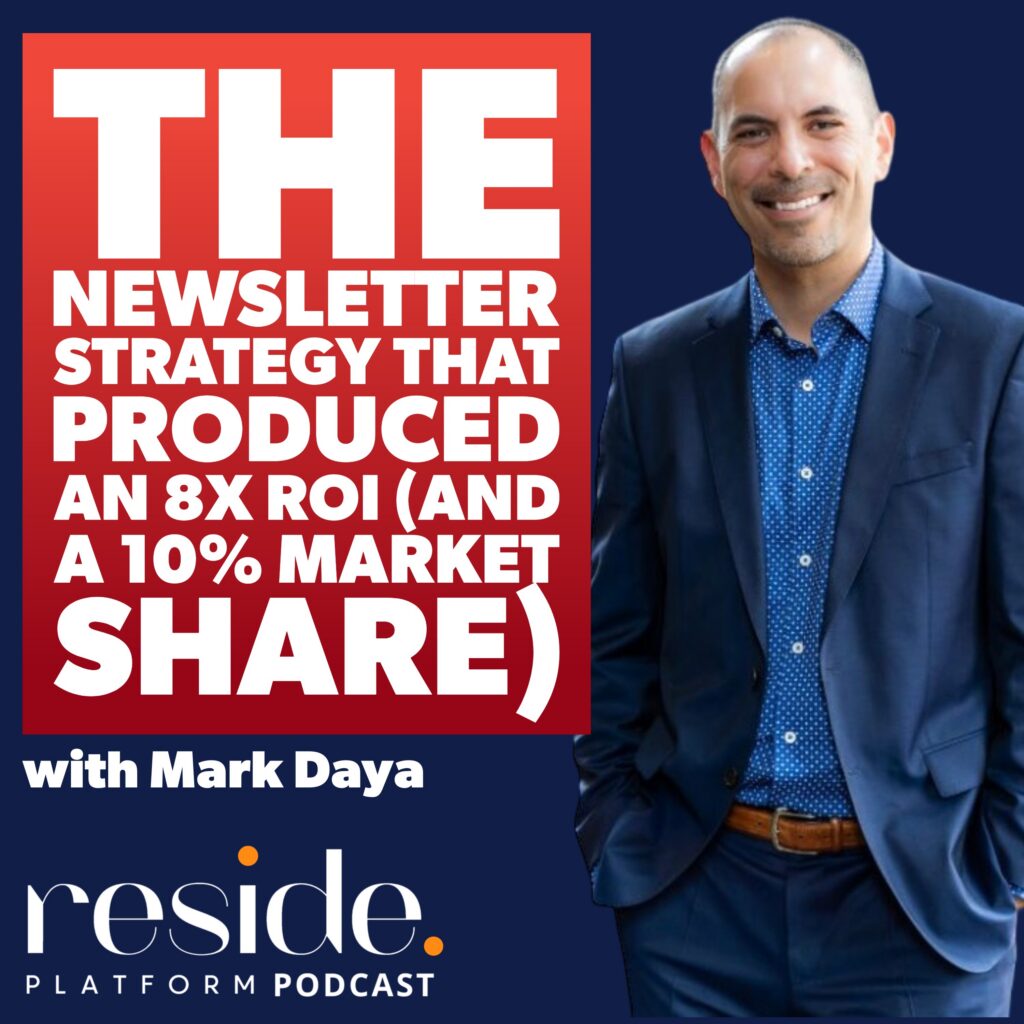
Mark Daya shares the real story behind becoming the top solo agent in Rancho Cordova—and how that reputation helped unlock an opportunity to help develop a new downtown project featuring a 7,500-seat sports and entertainment arena. Mark and Suneet walk through Mark’s journey in reverse: from investing in the arena vision, to building hyperlocal dominance through direct mail and a newsletter that generated an 8X ROI, to surviving the 2008 downturn while navigating major family health challenges. The conversation breaks down the difference between being reactive vs. proactive, why your calendar must match your goals, and how consistency (in marketing and leadership) compounds over time. Mark also explains the transition from top producer to team leader, the importance of meeting people where they are, and why “head on a swivel” relationships can create unexpected income streams like flips that fund bigger bets.
Chapters:
- (00:00:00) Be obsessed, be shameless, get coached
- (00:00:20) Intro: Mark Daya + why this episode matters
- (00:01:00) Mark’s background: 20 years in real estate + “king of Rancho”
- (00:02:00) The downtown Rancho Cordova arena project (timeline + scope)
- (00:04:00) How the arena opportunity started (NDA + relationship leverage)
- (00:07:00) Reputation creates opportunity (do the work, leave a footprint)
- (00:09:00) The moment that changed everything: “I’ve never heard your name”
- (00:10:30) The hyperlocal newsletter + EDDM strategy (costs + ROI)
- (00:13:30) 2008 crash + family health crisis (reactive business mode)
- (00:17:30) Betting on yourself: wiping the slate clean + going all in locally
- (00:19:30) Branding lesson: give people what they want, not your face everywhere
- (00:21:00) Proactive vs. reactive: start with your calendar
- (00:23:00) “Head on a swivel”: flips, partnerships, and compounding opportunity
- (00:24:30) Why a team became necessary + early scaling lessons
- (00:27:00) Becoming a better leader: consistency, meeting people where they are
- (00:35:00) Advice for agents: time blocking + congruence between goals and calendar
- (00:37:00) Advice for team leaders: emotional consistency + set the example
- (00:39:00) Where to find Mark + closing
Links and Resources:
- Mark Daya on LinkedIn
- Website
- Team Leader Secrets by Suneet Agarwal
Thanks so much for joining us this week. Want to subscribe to the Reside Platform Podcast? Have some feedback you’d like to share? Connect with us on Spotify, Apple Podcasts and YouTube to leave us a review!
KEY QUESTIONS ANSWERED —
Read More
Q: How did Mark Daya become the go-to agent in his market?
A: Mark built his reputation by consistently delivering value to his community. He created a high-quality, hyperlocal newsletter packed with market stats, local stories, and upcoming listings, which he mailed to every home in his target area. By focusing on what residents cared about and staying visible, he became the trusted local expert and attracted more business.
Q: What was the turning point that helped Mark scale his business?
A: After facing personal and market setbacks, Mark realized he needed to stop being reactive and start planning ahead. He began time-blocking his schedule, investing in effective marketing, and setting clear goals. This proactive approach helped him regain momentum and set the foundation for building a team.
Q: What marketing tactic gave Mark the highest return?
A: Mark’s monthly, four-page newsletter delivered via every door direct mail was his most effective tactic. By offering valuable, hyperlocal content and making the newsletter stand out, he achieved an 8X return on investment in his first year, primarily through increased listings.
Q: How did Mark transition from solo agent to team leader?
When Mark became too busy to handle all his clients, he brought on a buyer’s agent and gradually expanded his team. He shifted his focus from personal production to supporting and coaching his agents, learning to adapt his leadership style to meet their individual needs.
A: What advice does Mark have for agents stuck in a reactive business?
Mark advises agents to get proactive by time-blocking their calendars and aligning their daily activities with their goals. He recommends seeking coaching, finding accountability partners, and always having a clear game plan to avoid long periods without deals.
Q: How does Mark approach personal branding in real estate?
A: Instead of promoting himself or his image, Mark built his brand around providing valuable information and resources to his community. By focusing on what mattered to residents, his reputation and personal brand grew naturally.
Q: What was the hardest part about becoming a team leader?
A: Mark found it challenging to recognize that not everyone is motivated or works the same way he does. He had to develop emotional intelligence and learn to support agents with different strengths and goals, rather than expecting them to mirror his own approach.
Q: How does Mark spot and create new opportunities in real estate?
A: Mark stays open to new relationships and keeps his “head on a swivel” for opportunities. Whether it’s partnering with contractors or investing in major developments, he looks for ways to evolve his business by connecting with the right people and being ready to act when opportunities arise.
THE TRANSCRIPT —
Read More
Suneet: [00:00:00] don’t wait for the perfect environment or situation. Just go in, be obsessed, be shameless, get coached, And make it happen.
Suneet: Welcome back to the Reside Platform. I am your host today, Suneet Agarwal, and today I’m super excited to sit down with a good buddy of mine, Mark Deya, founder of the Sack Platinum Realty in Sacramento. What’s up, bro?
Mark: How are you? It’s been a while. It’s only been about a week or two. Yeah,
Suneet: yeah.
Suneet: Haven’t seen you in a whole week or two, yes. So for everyone listening, Mark’s been in real estate for 20 years, went through the 2008 financial crisis, can’t wait to talk about that, and went on to become, this is le- this is legitimately accurate and everyone in Sacramento knows it, the number one agent in Rancho Cordova [00:01:00] as a solo agent, selling a ton of houses.
Suneet: You guys, like, every agent in Sacramento knows that Mark is the king of Rancho. It’s incredible. he since built a team, and now is part of a group developing, this is also very cool, folks, a brand-new downtown for Rancho Cordova, including a 7,500-seat sports and entertainment arena.
Mark: Yeah. Let’s not forget the couple hundred thousand square feet of retail space and, you know, just the three hotels and apartments and all that stuff along the way, too.
Suneet: Yes. Dude, you guys are going to, like, reshape Rancho, , literally.
Mark: It’s gonna reshape the entire Sacramento region. It’s really gonna shift the center of gravity from downtown Sacramento to more towards, Rancho Cordova and the suburbs. What we’re providing is,, it’s unparalleled. Just the entertainment lifestyle and, and its location, its proximity to just the money centers [00:02:00] around town, , it’s perfect.
Suneet: Totally. You know, Rancho, like, being on the highway where it is, next to these bigger cities, which I know you guys know, obviously, what’s the timeline on that?
Mark: We have a very aggressive target and we are looking to move ground this year. , Sometime this summer we’re moving dirt and,, if everything goes according to plan, , then by the very end, by November, December of ’27, we’ll have the arena portion done.
Mark: , Like right around that period of time, so a year. We’re moving some pieces around at the moment to, you know, financially to make all this happen, but we’re there, man. –
Suneet: It’s so dope. In a year and a half.
Mark: Gonna build an arena. Wow.
Suneet: Every time I hear about this, like you guys who are watching and listening, me and Mark are boys.
Suneet: We both live in the same town, operate in the same town, and I’ve been like talking to him about this, and it’s just incredible.
Mark: Yeah. The renderings would just [00:03:00] blow you away. I know. It’s pretty incredible.
Suneet: Okay. You’re, getting me way too excited and I’m starting to drift off,
Mark: we could just talk about this the whole time, but I don’t think the audience will get a lot out of this conversation.
Suneet: Well, that’s the thing too, right? Is like you being the realtor, the local guy there, , were able to put together this opportunity.
Mark: That’s worth talking about, like how that came to pass and why that came to pass and, , because that is related to really , the fundamentals of my business.
Suneet: Totally. Okay. So let’s just go there right now instead of teasing people, right?
Mark: W- we’ll work this backwards, right? Let’s work , from the end to the beginning and how I’m at where I’m at now , and kind of like what I went through to get here. , It’ll make sense, what happened was, it was, I wanna say February of ’24, I was approached by a local gentleman, well known in the Sacramento area.
Mark: He was the executive director , of development for the Kings Arena, for the Golden 1 Arena, you know, downtown Sacramento.
Suneet: Which is also newer and very nice and… [00:04:00] Totally.
Mark: Yeah. That was built in 2013, I wanna say., Yeah, I know, right?, And he approached me, He lives in Rancho Cordova.
Mark: , We go to the same church. And he approached me about saying, you know, I had to sign an NDA, which is always exciting. “Ooh, you know, what secret am I gonna be learning about?” , And he approached me about this project, and he approached me because, he’s done, development programs.
Mark: He does public-private partnerships, and the one, loss that he took was, again, his career was because of a realtor. And the realtor kind of rallied the people saying this is gonna be bad for property values or this is gonna be bad for traffic or whatever it is, you know? Just one of those guys that just said everything is bad and, the thing wasn’t approved, city council didn’t vote for it.
Mark: I don’t know the details of the project. But what happened was that he came to me and said, “Hey, this is what I’m doing. What do you think?” He’s trying to fortify his weak [00:05:00] spots, right? Thinking ahead, like, “Okay, he’s the number one realtor in this area. I gotta go talk to him.
Mark: I’m gonna make sure I’m not gonna make that same mistake twice. Let me bring him in, show him what’s going on.” And so I learned about it for the first time, and I was like… And back then, it’s not even the same project that it is now. It’s even bigger now than it was then. It’s incredible., But during this period of time- He approached me about, last September, a-about, , investment opportunity into it.
Mark: And I looked at the numbers and, it was really a bit of a leap of faith on my part because we didn’t have city council approval then. A lot of groundwork was laid, don’t get me wrong, but it was still early in the process, much earlier than where we are now.
Mark: And but I took that leap of faith and, , put a lot behind it, and, uh, we’re at where we’re at now. But it really came to pass because of the effort that I put into it, the c- the people that you meet along the way, the reputation that you develop for yourself. You do good work. You work hard. You’re honest.
Mark: You put the clients first. , You put the money second., You just try to do the right thing all the [00:06:00] time and get a good reputation for yourself. It’s, you know, it’s not rocket science. It’s, , it’s hard to do, right?
Mark: It’s simple, the concept, but maybe hard to execute because it’s a lot of work, man. It’s a lot of, getting out there, a lot of making yourself vulnerable, a lot of taking risks. You know, what marketing is gonna work, what’s not gonna work.
Mark: , You can spend an infinite amount of money in this business. There’s plenty of vendors that are gonna take your money, just like you. But, , some of it works, some of it doesn’t, or maybe sometimes it, like, maybe ones that don’t could have worked if you would’ve pa-paid more attention to it, really developed it to its maximum potential, right?
Mark: So, you know, along the way, you know, I, I was able to establish myself , and in so doing, I made myself a target, and it was just a matter of saying yes at that point.
Suneet: Dude, yeah, you just did the work and were known in the neighborhood, and the opportunity kind of landed in your lap.
Mark: Yes. I [00:07:00] mean, it’s really what it was.
Mark: It was, “Hey, I got this thing I wanna show you,” and then he came to me when they were looking to raise money. I was one of the very first investors going into this thing early on. And, I could’ve said, “That’s too risky.” I could’ve said, right, these kinds of things. But you know this more than anybody, probably, I know, which is it’s all about the people.
Mark: , It’s less about the project and more about who’s involved in the project. You invest in the people more than anything else. That’s where, that’s how you know if something’s gonna succeed or fail , is the people involved, without a doubt.
Suneet: Yes, dude. So great. So yeah, you guys, everyone listening, right?
Suneet: Mark is Has notoriety in his market, and the notoriety put this opportunity in his lap. So, so people listening, like, you know me, I’m a fancy coach, right? Mark, so I gotta give a coaching moment, is, hey, [00:08:00] do a good job, right? Be known, right? Set your footprint, right? Instead of whatever kind of chasing leads to business that you think that you need to create.
Suneet: And honestly, it drives me crazy. ‘Cause here you are, and yes, you guys still have leads, you guys still do all, the things. But also, like, your hard work and your footprint has resulted in you being number one in your market. And like I said, this is my third freaking time saying it now, every agent in Sacramento knows that.
Suneet: Right? Like, it’s almost a joke. Like, I remember, you know, and we got a bunch of listings there too. I was like, “Man, we’re in Mark’s hood.”
Mark: I know. Whenever I , see you out here, I’m like, “Hey, that should’ve been my listing.”
Suneet: Yes, exactly. Exactly. Uh, good. Okay, so-
Mark: Like, what did I do wrong? That’s what I ask myself.
Mark: Yes. [00:09:00] And actually, , you know what about that? That is literally w- what got me to where I’m at today, is asking that question one, one particular time. I was in a listing presentation, and this is, this goes to kind of like the core of my success, to be perfectly honest with you. , So working backwards, like I said, we’re gonna tell this story backwards now.
Mark: Uh, I was in a listing presentation. At this point in time, I had established, uh, a good business for myself. I wanna say it was in 2015. Had my best year ever. At that time in my career, I closed 52 transactions in 2015. It’s a lot, for sure. And, in 2015, I was the number one agent in my subdivision, in Anatolia, which is where I focused on.
Mark: And I go into a listing presentation, and I go to the guy, I’m like, “I’m, you know, I know this area,” like blah, blah, blah. I say something. I don’t know what I said. I’m the number one agent. Whatever. I said something like that. And he turns to me and says, “No offense, but I, I’ve [00:10:00] never heard your name before.”
Mark: Even though he drives, , I was building like a couple houses. , Like there were empty lots there I was developing that had a six-foot, like, for sale sign on the lot with my name on it that he drives past every single day. Okay. But you know what? That’s my fault. He did not know who I was. That was my fault.
Mark: So, what did I do? I researched on, okay, I need to get a newsletter out there , in everybody’s inbox every month. And I didn’t just do a one-page newsletter like everybody else does. I’m like, “No, no, no. If I’m gonna put a newsletter, if I’m gonna go direct mail, it’s gonna be the best newsletter anybody has ever seen, and they will not throw it away.
Mark: Or if they do throw it away, they’ll give it the respect it deserves to open it up at least before they throw it away.” And that’s what I did. So I created an 11 by 17, folded in half, so it’s a four-page newsletter with hyperlocal content, like a picture of the clubhouse on the f- on the cover, you know, to the Anatolia resident.[00:11:00]
Mark: Made it look , like a real newsletter, , showing recent sales inside, showing, like, upcoming listings or showing, properties for sale. On the backside, showing some statistics, number of homes listed, sold, average sale, right? All the normal stuff that you put in there, along with a, some, like my thoughts for the month.
Mark: I did every door direct mail, and it just so happened that the routes coincided perfectly with the subdivision, so I was able to save a lot of money doing it that way. , And I just hit every door direct mail every single month. I did that. I put it on cardstock there’s a lot of companies out there like Corefact and all that stuff, but honestly, I was able to get that to the door for less than what Corefact does for a standard postcard.
Mark: Now, obviously prices have gone up since then, but still to this day, , I’ve shifted from cardstock to magazine, , paper. I want to say to produce the, , full bleed, , to do it, I do it for 46 [00:12:00] cents, , and then , plus EDDM. So you’re at, I forget what the total is, but I’m delivering this thing for like, I think 78 cents, if I’m not mistaken, per door.
Suneet: If you’re listening to this and don’t see my face, it’s a look of shock.
Suneet: How many people get that newsletter?
Mark: 2,200.
Suneet: 2,200. Yeah, so here’s the thing. It’s not some big overwhelming amount either.
Mark: First year I got a 8X ROI on it.
Suneet: Only?
Mark: Yeah, only 8X. And
Suneet: with all listings?
Mark: Yeah, with all listings. Yeah. After having a stellar year in 2015 and then, reinforcing that and continuing that moving forward, , at one year, I think, uh, I forget which year it was, but I managed to do I think 24 sales maybe, 20, 20 to 24 sales, somewhere in there,, in that subdivision, which has 2,200 homes.
Mark: , Back then, there was about 100 transactions or 200 sides, a year. So it was about a 10% market share in [00:13:00] the best year. There’s a lot of competition in the area. But it was solid, you know? It was solid. But my whole brand, my whole identity,
Mark: I went all in at that point because if I wanna take a step backwards to explain where I came from to get to that place, you know, I think the best thing to do is to start at, after a good start in my career in real estate in 2005, 2006. , In fact, in 2006, the month I got married, I had my best month ever.
Mark: It was all new home sales, ’cause it was all in Anatolia, and I made, like, $40,000 that month I was on my honeymoon. It was amazing. It was amazing. And then I didn’t close another deal for five months. Oh.
Suneet: What happened?
Suneet: You had 40 grand and you started, and you took your foot off the gas?
Mark: Well, quite frankly, let’s just call it what it is.
Mark: I got lucky. It was me being in the right place at the [00:14:00] right time, me running Craigslist ads for free. “Get $100,000 off list price of your home,” ’cause, you know, the builders were, like, slashing prices. And I’d walk them in, I’d register them, they’d get a great deal, and they’d feel really good. I’d get my commission, and that was that, right?
Mark: In 2005, 2006. And things just dried up at that point. It was just the people weren’t buying. The market dried up. Like, what I was doing just was no longer working. It was tough. I was struggling.
Mark: Nobody knew what kind of trouble we were in. You know, 2008 hadn’t hit yet.
Suneet: Bro, I was so carefree and irresponsible, making so much money in the mortgage game. Yes. I was buying houses. Yes.
Mark: Yeah. Nobody, I did not have the foresight. I did not have the wisdom. That is one thing I did not have back then.
Suneet: Totally.
Mark: And I didn’t know what I didn’t know. I went into it, and, , eventually what ended up [00:15:00] happening is that, , my business volume got cut in – my number of units I sold got cut in half. The prices got cut in half. My income got cut in three quarters. And while all of that is going on, you know, my wife gets diagnosed with autoimmune issues, and it was bad enough where she was in a wheelchair.
Mark: It was a tough time because I was the mom, the dad, the nurse, the cook, the business owner. Like, trying to do- trying to deal with the – medical stuff and, you know, it was really, really hard, and as a result, as you could imagine, my business became very reactive.
Mark: There was no bandwidth to become proactive. It was really, really bad.
Suneet: That’s really good what you said there, dude. I really like that. “My business became reactive ’cause there wasn’t any bandwidth to become proactive.” , That’s a writer-downer for everyone listening.
Mark: It has scarred me to the point where I fi- feel the need, the genuine need to be so [00:16:00] proactive all the time, trying to… , like sometimes I catch myself being reactive, ’cause let’s just be real, it’s easier to be reactive.
Suneet: Totally.
Suneet: It doesn’t involve any planning.
Mark: No. It doesn’t.
Mark: You know, something comes your way, I’ll handle it. Fire, I’ll handle it. Whatever. . But to be proactive is, it requires intention and requires planning, , and I had no bandwidth for that. , But , thank goodness, we managed to get her some kind of, alternative therapy, medical care out in Reno.
Mark: You have to go to Nevada for this stuff, it got her out of the wheelchair, let’s just put it that way. Got her, it got her from like being 90% in the wheelchair to like 50%. So it was a big improvement, and then at that time we had this angel, a friend of ours live with us, , and she managed to, , just move in.
Mark: The timing was just perfect. , My wife used to be her boss, then she moved out of state, then she moved back, move in with us to help take care of her. , And then all of a sudden there was this weight that was lifted off my shoulders that [00:17:00] I didn’t know was there. And all of that creativity that I didn’t know was kept inside because I was just in this, , survival mode, , came flooding out, and that’s where I went, ..
Mark: I worked till 11:00 at night every night because I couldn’t stop. It was just, there was all this pent-up energy of this realization, like, “I can do this.” And in 2012, I ended up,. well, actually, this roll into 2013, I had a big closing at the end of 2012 and I had to decide if I was gonna do this business or not.
Mark: I was literally out there putting resumes for state jobs that wouldn’t even pay my bills. It was like that. And my story is the epitome for thanking God for unanswered prayers. I mean, because that’s what this was, ’cause I was begging to get a job, begging to put food on the table.
Mark: I mean, it was, , pancakes and eggs for dinner because we’re trying to make it fun for the kids. That’s all I could afford. When that person moved in, [00:18:00] it really, unleashed that creativity, like I was saying. So I bet on myself. I did an offer in compromise with the IRS.
Mark: I took the money. I filed bankruptcy. I just wiped the slate clean and said, “Let’s do this.” I just completely bet on myself at that point in time. And then it was, “Okay, let’s do Anatolia. Let’s attack my local market. Let’s be hyper, I no longer have it because I don’t need it anymore, but it was anatoliahomesforsale.com.
Mark: . I put, lawn signs in the common areas, “Visit today, anatoliahomesforsale.com.” I never made it about markdia.com. I never made it about come visit me. I figured nobody cared about me. Nobody cared what, , they just… They cared about what I knew, right? They, they wanna know what I know. So I gave that information away freely, and as a result of that, I really branded myself and became known as the local expert.
Suneet: See, that’s an important – distinction [00:19:00] right there, bro, building the personal brand by putting your name everywhere. , That’s not how it worked. You put what people wanted, and your personal brand grew. I can share the same thing, right? So that’s a really important distinction, especially in real estate, which, not that this is good or bad, but it’s a ego-driven business.
Suneet: Look, people put, historically put their face on the sign, right? That leads to ego and vanity. Not that it’s bad, but does your sign now have your face on it?
Mark: Nope, never has.
Suneet: My sign has never had my face on it either.
Mark: Well, there’s good reason for that.
Suneet: Yeah. Dude, true, right? Like, for the longest time, when I first became an agent, I didn’t even put my real name on there.
Suneet: I put Sunny. I put Suneet, Sunny Agarwal, [00:20:00] people wouldn’t be afraid to call me and, right, like worry about mispronouncing my name. Yes, anyway.
Mark: Yeah. No, it’s a thing. It’s a thing. You have to think, you have to consider that, for sure. It ended up being, like the, going through that ended up being the biggest blessing because while we still have, you know, continuing health issues, but in the sense of, you know, the personal development that it forced me to go through, the kind of scars that it left me with, the, .
Mark: it has definitely left an imprint on me and formed me as a person going through those particular stru- struggles. , and I wanna pass those lessons along to other people to make sure that they don’t make the same mistakes that I did. And the main one was, , allowing, yourself to get in a position where you become reactive and you’re not proactive.
Mark: You don’t have a game plan.
Suneet: Yes. So what do you tell an agent? ‘Cause we both know many, many agents who are living in that reactive place, especially as the market becomes more challenging, right?
Mark: [00:21:00] Yeah. Yep. Become obsessed.
Suneet: Here’s one thing. It’s become obsessed, but also be shameless, right?
Suneet: Like, you were putting out bandit signs, you were running Craigslist ads, right? –
Mark: When you get really low, I mean, like, whenever, like, you feel like the whole world is crashing down on you have to ask yourself, , what are you gonna do about it? And some people will retreat in, , flight to safety, and other people come out fighting.
Mark: There’s no right or wrong. Look, it’s just, like, we are who we are.. If somebody goes to, to retreat, like, I, empathize with them, like, I do. I genuinely do. , But my message to people is to not get yourself in that position, is to share the story and let people know, like, don’t let yourself ever get there and be put in that position.
Mark: And the way to do that, in my opinion,.. one of the ways to do that is with coaching. The people that have been there before, the people that have seen those struggles or even the coaches that are [00:22:00] talking to other people that have been through there that can also pass that same message along to you to say, like, “Listen, I’ve seen what this person do.
Mark: This is the path that you’re on. You don’t wanna go down that path. This is what’s gonna happen. Let’s get ahead of it now. Let’s put this game plan together and become proactive.” And what that means for everybody, look, we have different personalities, we have different strengths. Some people are just great on the phones.
Mark: They could be a bulldog on the phone. Some people are petrified of the phone and, but just dominate open houses. So find, do open houses seven days a week if that’s what it takes. Because at some point, You don’t wanna look at yourself in the mirror and think to yourself, “I just let myself down because I could have worked harder, and I chose not to.”
Suneet: – No regrets, right? Like, do the damn work. Be obsessed. Be shameless.
Mark: Yeah. Look, and when you achieve some level of success- It creates momentum. It, you start achieving critical mass. That’s the goal. , What I have found in my career many times over [00:23:00] is that i have kept my head on a swivel.
Mark: As I’m progressing in my business, I’m looking for opportunities along the way, not just in my own real estate sales business, but, take flipping for example. For the longest time in my career, I never flipped a home, for the longest time. I’ve been doing this for 20 years, and I just barely started doing it a couple years ago.
Mark: But it was because I met a lead. The lead was a general contractor. General contractor was cool. I decided, “You know what? I wanna get to know this guy, and I’m gonna let him get to know me.” We had some, let’s just call it coffee dates, right? Getting to know each other, feeling each other out, and we’re like, “, let’s do something together.”
Mark: And then we just started flipping homes and I’m like, “Oh my gosh,” right? Now, like, I was able to get the money , from that in order to invest in the arena. If it weren’t for me talking to this guy, I wouldn’t have been in this position to, , put money into the arena, right?
Suneet: Yes. Head on a swivel, dude.
Suneet: Great. Look for the opportunity. In fact, not look for it, create it.
Mark: Yeah. I mean, even my brokerage, Zack Platinum Realty, the, entity, , I joined my broker aside, I’m with Side. And that was the same kind of concept. It [00:24:00] was my head on a swivel. There was an opportunity that presented themselves. I looked around.
Mark: I was the dumbest person in the room, so I figured this is where I gotta be. And Side partnered with me, I partnered with them. It was great. They opened up Zillow Flex for me. And keeping my head on a swivel is what allowed me to continue to evolve my business, to take the one guy’s telling me that he doesn’t, know who I am, and I invest in newsletters and I get a 8X ROI on that, and I get to the place where, oh my gosh, I have to have a team.
Mark: I never sought out for, to make a team. I was just closing deals.
Suneet: Totally. , How did that happen? What was the journey that made you say, “Hey, I have to start a team”?
Mark: I couldn’t be two places at once, and I was drowning. And so there was this one title rep.
Suneet: You were too busy.
Mark: I was too busy. And there’s this one title rep that just wanted my business, and I turned to her, I said, “You get me a buyer’s agent, you can have my business.” And she did. [00:25:00] She got me an agent, and she was amazing. She’s since retired. But yeah, her first year working for me, I think she made,
Mark: And I had no systems. Zero systems. Totally. It was
Suneet: just, “Hey, here’s a lead. Can you call him?” Right? Yeah.
Mark: Yeah. I think she made, like, 175,000 her first year working for me. I mean, just like, right? And that was back then. , That was pre-COVID, so that was, like, really good money. That’s what happened.
Mark: , And then I started trying to put a couple of things together, get a couple of other agents. I was really, really small, but it worked. And I started putting the pieces together to support them, but then I realized it was scalable. And I was like, “Well, let’s just do this.” So I pivoted from me being all production all the time to trying to be more of a team leader.
Mark: But it’s a hard transition for me personally, because I’ve been that lone wolf for so long, and that is what I was good at. And for me to be a top producer doesn’t neces- necessarily make a great team leader. But that’s why I’m like, “Listen, I know my weaknesses, so I’m looking to shore up some of my weaknesses,” which is why I personally joined [00:26:00] the Reside platform, because I knew that you guys filled a lot, like almost all of the gaps that I have, , can get solved in one shot.
Mark: That’s where I kind of merged with you guys.
Suneet: Yeah. Right? And that’s the thing is that came from me, my head being on a swivel, and also creating the opportunity that I saw, right? Like almost everything I’ve done in my life, all my businesses that I’ve opened is because I saw a necessity and I saw that I could do it, right?
Suneet: Even if I didn’t really know how to, right? But don’t wait for the perfect environment or situation. Just go in, be obsessed, be shameless, get coached, right? And make it happen. And yeah, that’s really, uh, resonating with me. So what was the hardest part about going from like this stud agent, top producer into leading a team?
Mark: The first [00:27:00] stumbling block that I feel came across is that I didn’t meet people where they’re at. I kind of like allowed my own, style and goals, , and just kind of assumed that other people are like me. That was my first mistake, , and I didn’t realize how it was coming across. And I’ve achieved a great level of success, and now what motivates me more is to help, help others do it too.
Mark: I would rather be the coach of a championship team than the MVP. Like I don’t want to be the MVP of the team. I want somebody else to be the MVP. I want to be the coach of that team. I think there’s way more, it’s way more gratifying for me to see others succeed, that I’m able to give them a platform for them to grow.
Mark: And the challenge is me meeting them where they’re at, understanding, having the The emotional intelligence to, to manage different people different ways, that is not my strong suit. That is my wife’s strong suit, not mine. , My wife [00:28:00] has a PhD in that stuff, okay? But not me. , That is definitely my biggest challenge is, I want it so bad for everybody, though.
Mark: I want them to all achieve, like, everything that they ever want, and I just gotta figure out a way how to, make that happen. But that’s where I’m looking at, you know, plugging people into Rise Training and plugging people into Amplify and, the weekly training to, to shore up some of these things that I’m not able to do.
Mark: But at the end of the day, it’s up to them. I can’t want it for them, but I’m gonna try to clear the path for them as much, as best I can, so that way they can achieve their goals.
Suneet: So what was the shift that got you to change from my way or the highway into what it is now? ‘Cause, dude, it’s, like, a real thing.
Suneet: It’s a real thing. Like, back then, like, I remember my contract said, “If you do not close two deals a month, you are off the next month.” Well, if, that was true, I wouldn’t have a fucking team.
Mark: Yeah. At the end it was literally somebody saying, like, “I’m not looking [00:29:00] to work like you.”
Mark: And let’s just be real, like, it’s sick. Like, how, how many hours a week that I work, it’s not okay. It is not okay. – I mean,
Suneet: it’s not okay for, for everybody.
Mark: Not okay for… No, it’s just not okay, man. It’s not okay for anybody. Did your wife have to
Suneet: say, “Mark, get home”?
Mark: Well, She has given me so much grace.
Mark: She understands, like, where we’ve been. She understands why I am the way I am, that I’m still in kind of fight or flight mode, ’cause I just assume… ‘Cause you go five months without getting paid, not knowing where, how that happened. It just happened, and I’m like, “Look, that could happen tomorrow.”
Mark: You are unemployed as soon as you close that next escrow.
Suneet: Bro, you are operating from a place of, like, not wanting to go back, so you could call it fear. And you know what? If that motivates you, great.
Mark: And it does. For me, I get motivated by fear.
Suneet: Yes, me too. Like, I’ve lost [00:30:00] everything I owned, I don’t know, two times or three times.
Suneet: I had to reinvent myself and, like, create, and now I’m on the fourth reinvention right now. But it’s coming out of, like, fear. Like, I remember 2008 and losing everything. Then I remember building it all back and then some, and losing it again in 2012, right? And people say, “Hey, Suneet, how were you able to become number one and do all this?”
Suneet: ‘Cause I was scared as hell of going back to that place. Like, that was not an option. As soon as my first kid was born and, – Well, she’s 10, so 2016. , Yeah, her birthday is 2016. , It was game time, right? Like, thank God that I was single or just , had a girlfriend the other two times that everything bad happened, because I would’ve had a family.
Suneet: I don’t know where I would be, right? Like, I might be that guy with a state worker giving up on all my dreams, right? And now, for both of us, because of the hard work that we’ve [00:31:00] done, we’re looking at some of the biggest opportunities in our damn lives.
Mark: Can you believe it?
Suneet: Yeah. No. I can’t believe it for you.
Suneet: I can’t believe it for me.
Mark: Dude, yeah in all of this, if you- look at it in sum total, like where I started, , the, hard part, and then coming out of the hard part and truly betting on myself and going all in on myself and re- you know, investing everything, you know, back into my marketing, it’s funny, Robert Palmer had a very similar story, how he just kept putting all his money back into direct mail, right? He just , bet on himself.
Suneet: He was living in a shitty apartment, making all his money, but just reinvesting everything.
Mark: Everything goes , back into marketing, back into himself.
Mark: – Find something that works and just go all in on it. My biggest regret in this business is that the year that I hit 52, , for the first time, that was also, I started, , buying Zillow leads back then. And year one investing in Zillow leads, I had a 8X ROI on that too.
Suneet: was way [00:32:00] easier back then too.
Suneet: Yeah.
Mark: Yeah. Now, stupid me, I should have bought all the leads. All of them. I should’ve said, “You know what, Zillow? I wanna buy all of Sacramento. I’m gonna figure out…” just like Robert Slack. That- that’s basically what he did, and
Mark: i didn’t think about that. I, I could, could’ve made millions, but, , didn’t have the entrepreneur in me just yet.
Suneet: At that time.
Mark: At that time. I had to learn. Had, had to learn a little bit more. But it was quite the journey.
Suneet: Yeah, and it always is, dude, right? And , the thing that separates the winners, and I’m not gonna say losers, but the people that don’t win, is the wherewithal, is the grit.
Suneet: Like, you could’ve given up and got that state job, right? Like, I could’ve, in 2012, dude, like, I didn’t know what the hell I was gonna do, right? I sat on my h- I sat in my house, my little rental shithole, with nine dogs for a year just working out, and my mom paid my rent, right? I was, 2012, like, how old was I?
Suneet: [00:33:00] 36, right? And I thought my life was over
Mark: Yeah, , it’s crazy how, the journey happens. But for both of us,, here in the Sacramento area, it’s been, , quite the journey. And now we’re looking at, I’m looking at this downtown in a project in front of me. We’re just raising money for it and, you know, we’ve got the limited partnership, and
Mark: everything is looking amazing. Like, just the city council’s been amazing. This whole journey from begging to get out of this business to building a downtown.
Mark: Like, how does that even happen? I don’t even know. But it was just, for me personally, it’s, been a little bit about being in the right place at the right time, but also having my eyes open.
Suneet: And doing the right thing.
Mark: And doing the right thing along the way.
Suneet: Right? And that’s, the crazy part that I’ve really been, like, thinking about lately, is like, when you look back from, like, a narrow lens, you don’t really see everything.[00:34:00]
Suneet: But if you look back far enough and see how everything has compounded, then it totally makes sense, right? Hindsight is 20/20 maybe, but it’s crazy. And I was talking to Cheplak about it , this week, ’cause I was all, , “Well, I don’t know if that worked, and I don’t know if that worked.” But ..
Suneet: as I’m talking to him, I’m all, “Oh, dude, what are you fucking talking about? It all worked.”
Mark: It’s funny how one thing leads to another, how it’s all connected. . You don’t see it while you’re in it until you’re far enough away from it, and you’re like, “Oh, man.” Like, you know, look at the suffering that we went through as a family and, to see where we’re at now, and I guarantee that I would not be where I’m at today if I had not gone through those really, really difficult times because I wouldn’t be the person that I am today at all whatsoever.
Suneet: Absolutely. I, I agree with myself 100%. All right, so some advice. What advice do you have for the realtors that are listening?
Mark: Look, guys, , if you are [00:35:00] listening to this and , the best advice that I could give you, number one, first and foremost, is, , be proactive in your business. And if you don’t know, if you’re looking at your calendar and your calendar is empty right now, you’re not time blocking, you do not have a proactive business.
Mark: Straight up, I don’t care what you say. All right? , Your calendar should be congruent with your goals. If you are going to do, you know, 40 transactions this year, whatever, pick a number, , and you don’t know where those transactions are gonna come from, it’s just a wish. It’s not really a goal. You need to have an idea of where those transactions are gonna come from, and then is your calendar reflective of that?
Mark: And – those are some of the fundamental building blocks in creating a proactive business. If you avoid being reactive, really get proactive, and if you don’t know how, ask somebody. [00:36:00] Get help. Talk to your broker. Talk to your team leader. Talk to somebody. Get an accountability partner – somehow, some way.
Mark: , If you do not have a game plan, if you do not have a proactive business, , you’re flying blind, and – you could end up exactly where I ended up , and going five months without a transaction wondering what the heck just happened.
Suneet: Yes.
Suneet: Yes. All super good. You start with a calendar. It’s one of the first things I ever got coached on, and my calendar now is a thing of beauty, right?
Suneet: Like, people ask me to send me their calendar so they can figure out how to do theirs, right? , How about what advice do you have for team leaders who are listening?
Suneet: Yeah.
Mark: , Team leaders who are listening, , obviously same thing goes for everybody because it’s just a , different kind of level.
Mark: Because what are your goals? And is your calendar congruent with your goals, , first of all? But I think that team leaders should have that part figured out. , Team leaders, , I would suggest, really getting a good understanding of your team, who they are, [00:37:00] get to know the people, , understand their motivations,, cheer them on, be really positive, be really encouraging.
Mark: I have heard horror stories of other team leaders, , being erratic, inconsistent., Personality-wise, you know, people not knowing if they’re gonna be, like, Jekyll or Hyde that day, right? Don’t be that person. Be the person that everybody just looks to, like, as consistent. Just be consistent, be a beacon.
Mark: Inspire. Be a beacon. Set the example. Be the beacon. Be consistent. Be consistent in your personality, your attitude, and how you show up every single day.
Suneet: Yes. Dude, and you know me as a leader early on, I was the most inconsistent hot and cold guy ever.
Mark: I heard stories.
Suneet: Yeah.
Suneet: Yes. Yes. Well, all the stories are [00:38:00] true,
Mark: right?
Suneet: And I had to really learn, a lot of this, and now, like, I’m one of the most consistent people across anything that most people know, and that has, resulted in my less of those stories being told. Right? Depends on who you ask, maybe. There’s some haters out there, but that’s perfect.
Suneet: Good. , If somebody wants to reach out to you and learn more about , the development that you’re doing, or just talk to you about anything, or even send you a referral for business, Mark.
Mark: That’s right. You don’t send it to Suneet at all whatsoever. He has no idea what he’s doing.
Suneet: Yeah, I don’t, but I have Anna Stender who definitely knows what, what you
Mark: do.
Mark: That’s true. That’s true. Like, you got that. No, no doubt about that. So Sac Platinum Realty is the name of my company, a local boutique based out in Rancho Cordova, which is just on the edge of Sacramento, , right off of Highway 50. You can visit my website. You can find me on socials, , Mark Daya, D-A-Y-A.
Mark: , That’s the easiest way to get ahold of [00:39:00] me. And if you have questions about the arena, , investing in that and the LP that we’ve got, which has got some sweet terms on it, let me know.
Suneet: Yes. Good. You guys, reach out to Mark, cause that investment opportunity is good. , It’s really good. I’m over here thinking to myself, “Okay, I’m calling my financial guy back.”
Suneet: So Mark, I’m walking back in the leads. I, I’m back. I’m back. Okay, good.
Mark: That’s okay. Hey, listen, it’s not for everybody, and that’s okay. It’s great. , It’s a fun journey. It’s amazing. What we’ve got in store is incredible. It’s gonna change everything out here.
Mark: It’s incredible.
Suneet: Awesome. Mark, dude, this was good. You really brought it, bro, so I appreciate it. Super good knowing you for all this time, , and admiring your business, and now working together in the Reside platform. You guys, reach out to Mark, dude. , He really just nailed the farming and just market domination, like very few people I’ve ever met, and I’ve met a lot of people in the real estate space, a lot of badasses.
Suneet: So [00:40:00] reach out to Mark. If you’ve got some spare money sitting in one of the accounts, that investment, if you wanna be part of an arena and sit in the owner’s box, right,
Suneet: all right, guys. Thank you so much for watching. I hope you got something out of this episode. I did. Reach out to Mark, and we’ll see you on the next episode of the Reside Platform Podcast. Thank you.