April 22, 2026
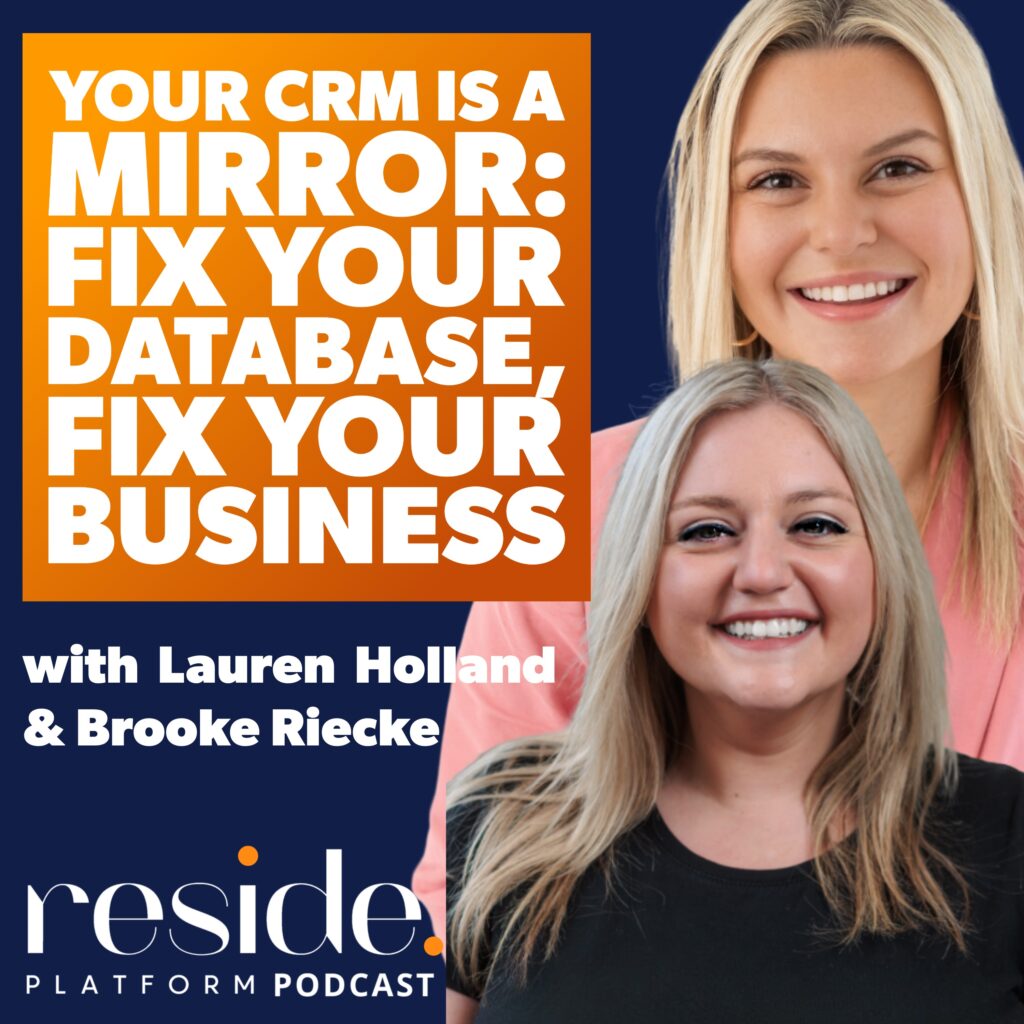
Lauren and Brooke break down Reside’s practical framework for cleaning up and optimizing any CRM so leads stop slipping through the cracks. They explain why a messy database creates a messy business, how to simplify stages into a clear lifecycle, and how to use tags for context without creating chaos. They also walk through the daily workflow that keeps follow-up consistent, including the must-have smart lists, contact frequency guidelines for each stage, and the difference between action plans and automations so teams can build a system that runs in the background while still driving real human follow-up.
Chapters:
- (00:00:00) Why agents lose money when their CRM is a mess
- (00:03:10) Your CRM reflects your habits: the mindset shift
- (00:06:00) Stages explained: where a lead is in the journey (not what you’re doing)
- (00:08:00) The simple 8-stage framework (10 stages or less)
- (00:11:00) Lead gen vs lead nurture, and why “nurture” is not “ignore”
- (00:15:00) Speed-to-lead: why the first 5 minutes matters
- (00:20:00) How to clean up a bloated “Lead” stage (2-hour audit plan)
- (00:24:00) Tags vs stages: how to tag without creating a mess
- (00:31:00) Smart lists: the daily roadmap and contact frequency by stage
- (00:51:00) Action plans vs automations (and what to automate vs keep personal)
Links and Resources:
- Team Leader Secrets by Suneet Agarwal
Thanks so much for joining us this week. Want to subscribe to the Reside Platform Podcast? Have some feedback you’d like to share? Connect with us on Spotify, Apple Podcasts and YouTube to leave us a review!
KEY QUESTIONS ANSWERED —
Read More
Q: Why do so many agents lose money from their database?
A: Most agents’ CRMs are disorganized, with leads stuck in the wrong stages, overdue tasks piling up, and past clients ignored for months. Even if you’re working hard, you might be following up with the wrong people at the wrong time, letting deals and referrals slip away.
Q: What’s the real difference between a lead problem and a follow-up problem?
A: Agents often think they need more leads, but usually have hundreds of untouched contacts in their database. It’s not a lead problem—it’s a follow-up problem that starts with how your database is organized and maintained.
Q: What does an optimized real estate database actually look like?
A: An optimized database is clear, consistent, and visible. You know exactly where every lead is in their journey, follow-up happens automatically with smart lists and action plans, and you can see at a glance what needs your attention each day.
Q: How many stages should you have in your CRM, and what are they?
A: Keep it simple—ideally eight stages: lead, hot, nurture, active client, pending, closed, sphere, and trash. Each stage should reflect where someone is in the client journey, not how you found them or what you’re doing with them.
Q: What’s the difference between a stage and a tag in a CRM?
A: Stages show where a lead is in the journey (like “hot” or “pending”), while tags describe facts about the lead (like “buyer,” “open house,” or “VIP client”). Use tags for context, not behavior or journey steps.
Q: How do you keep tags from getting out of control?
A: Limit your tags to under 100, and organize them into five categories: system/data hygiene, lead/client intent, lifecycle/transaction, relationship/referral, and activity/engagement. Clean up duplicates and only use tags that add real value.
Q: What are smart lists and why do they matter?
A: Smart lists are your daily roadmap, showing you exactly who needs attention based on activity, stage, and last contact. They help you prioritize follow-up so nothing falls through the cracks, and should be worked every day.
Q: What’s the ideal daily workflow for agents using a CRM?
A: Log in daily, clear your inbox (respond to everyone who reached out), complete your tasks (follow-ups you promised), and work your smart lists in order of urgency. Zero out your lists by reaching out, logging interactions, and setting next steps.
Q: What’s the most important thing for team leaders and admins to inspect?
A: Check who’s logging in, how many overdue tasks exist, and whether stages and tags are being used correctly. Visibility and accountability are key—if your CRM is messy, your business is messy.
THE TRANSCRIPT —
Read More
Lauren: [00:00:00] don’t be a single agent because people are going to forget you’re in real estate. It’s not their job to remember. It’s your job to remind them. Mm-hmm. And why I’m going down this path is they might think that, Hey, I need to do all this stuff before I even start looking.
Lauren: I need to do X, y, z. You are the responsible. You have that, fiduciary duty to educate them on the market and educate them on the steps of how to buy or sell their home. they might be more ready now than they think they might be ready right now. Yeah. And you could make their day, and give them all this good news.
Lauren: Right? So that’s what we’re talking about with nurturing their relationship. All right. Let’s talk about something that’s costing agents thousands of dollars every single month. And most of them don’t even realize it. It’s not their marketing, it’s not their lead gen. It’s not even their conversion skills, it’s their database.
Brooke: Exactly. and here’s the thing that most agents really think that their CRM is [00:01:00] working for them, but when you actually look inside their follow boss or whatever system that they’re using, it’s a complete mess.
Lauren: Mm-hmm. Leads stuck in the wrong stages. Overdue tasks, piling up past clients who haven’t been touched in 18 months. tags that don’t mean anything, and smart lists that are not actually smart.
Brooke: And the worst part is that they are working hard. They’re making the calls, they’re following up, they’re doing everything they’re supposed to be doing, but they’re following up with the wrong people at the wrong time.
Lauren: Mm-hmm. So today we are breaking down exactly how to optimize your database so that nothing falls through the cracks, because if it’s not in your CRM, it didn’t happen. And if your CRM is a mess, your business is a mess.
Brooke: Let’s fix it.
Lauren: Okay. Welcome back to the Reside Platform podcast. I am Lauren Holland, the Director of Client Experience here at Reside.
Lauren: and today I am sitting down with Brooke, r Ricky, our client success manager who works [00:02:00] hands-on with agents and teams every single day, helping them optimize their follow-up boss systems. Brooke, did I say your last name, correct?
Brooke: Yes. Yes.
Lauren: Oh God.
Brooke: Lauren and I have known each other for very long,for a very long time.
Brooke: I, I
Lauren: know we made a name. I can say that all the time.
Brooke: My last name used to be different, but, yeah, no, thanks for having me on this one, Lauren, specifically. I know, we’ve done some,great subjects recently that have been helpful for some leaders. but I’m glad that we, you today are talking about optimizing your database.
Lauren: Yes. me too.
Lauren: Brooke, before we dive in, why does this matter so much? Because I think a lot of agents here optimize your database and they think it’s just admin work.
Brooke: Yes. And that’s the problem because they think that it’s just busy work and they don’t have the time for it.
Brooke: but really the reality is that your database is your business and every has every lead that you’ve talked to, every client that you’ve ever closed, every conversation that you’ve ever had with the lead, it all [00:03:00] lives in your CRM.
Lauren: Right. And if that system’s not organized, you’re literally losing money.
Brooke: Yeah, exactly. Because when leads are falling through the cracks, you’re not just losing the one deal, you’re losing the referrals that they could have sent you. You’re losing the repeat business and you’re really losing that compounding effect of the relationships.
Lauren: Okay. So today we’re walking through that exact framework we use at Reside to help our agents and team optimize their databases.
Lauren: so whether you’re using Follow Up Boss, KB Core, lion Desk, any other CRM, these principles are going to apply.
Brooke: Yeah. Excited to get into it.
Lauren: Me too. So your, this is gonna be called your CRM reflects your habits. So we’re gonna start with the mindset shift, because I think that most agents look at their CRM as a tool, but it’s more than that, right, Brooke?
Brooke: Absolutely. and it is a tool, but it’s way, way more. Your CRM is really just a mirror to you and your business. It’s gonna reflect your habits, your discipline, [00:04:00] and really your consistency overall.
Lauren: Okay. So you’re saying if your CRM is messy,
Brooke: your business is messy,
Lauren: okay. Okay.
Brooke: Absolutely. And if your followup is inconsistent and your CM, it’s gonna inconsistent in real life, right?
Brooke: Mm-hmm. And if your stages don’t make sense, then your pipeline doesn’t make sense. It all becomes a jumbled sort of mess that’s really hard to decipher.
Lauren: Yes. And here’s what we see all the time. Agents say, I don’t have enough leads, but when we look at their database, they have 300 people that they haven’t talked to in about six months.
Brooke: Yeah, e exactly. And that means that you don’t have a lead problem, you have a follow up problem. And that follow problem starts with how your database is organized. before you go into, oh, we need more leads, we need to purchase more leads, or our agents are saying that we don’t have enough, I dare you to pull up your follow up process or your whatever serum you’re using, and look at those contacts that haven’t been communicated with in over 30 days.
Brooke: And you can start there to see do we actually [00:05:00] have a lead problem or is it the follow up problem?
Lauren: So good we double dog, dare you to go do that. Look at that data
Brooke: dog.
Lauren: So walk us through what the goal is here. What does an optimized database actually look like?
Brooke: Yeah, I think so. An optimized database really has three main things.
Brooke: You’re gonna have clarity so you know exactly where every lead is in the journey. You’re gonna have consistency. So your followup’s gonna happen automatically based on smart lists and action plans. and then third, you want that visibility so you can see at a glance what actually needs your attention today.
Lauren: Okay. So when you have those three things, nothing falls through the cracks, is what you’re saying?
Brooke: Exactly.
Lauren: Okay. let’s break this up into parts. so this, let’s call this the foundation. Mm-hmm. stages show where lead is in the journey. because this is where with smart lists, or I’m sorry, with stages, most DA databases fall apart.
Lauren: Brooke, walk us through it. What are stages and why do these [00:06:00] matter?
Brooke: I would say that stages are gonna show where your lead is in the journey right now. Not, what you’re doing with them, not how they found you, but just where are they right now in the journey.
Lauren: Okay. So most agents have way too many stages, right?
Brooke: Yeah. Yes. I mean, I’ve seen databases with 20 plus, 50 plus, I mean, crazy amounts of stages and half of them are duplicates or so vague that they don’t really mean anything.
Lauren: Okay. Give us some examples. Like what?
Brooke: so I’ve seen things like unknown, maybe interested, kind of hot.
Lauren: Mm-hmm. Okay. Tell me more.
Lauren: Kind of hot.
Brooke: Seriously. Seriously. Those are some I’ve seen. and no judgment because no judgment at all of those. That is something that you have. it’s just that the problem is when your stages are vague, your agents don’t know what to do with them. Mm-hmm. if you go in and you’re confused by what each stage means, [00:07:00] your agents are gonna have no idea how to qualify and they’re not gonna know what your stages mean either.
Lauren: Yeah, and I think this really goes into, even if, so I use this tool called Boomerang in my inbox. That’s how I like to try to achieve inbox zero at the end of my day. so sometimes I’ll boomerang an in an email, so that comes back to me, and then I forget why I have it coming back to me or if mm-hmm.
Lauren: notes on anything you do, like why this is in your calendar. make sure you’re putting correct stages. Brooke, what’s the solution here?
Brooke: I always say keep it as simple as possible. so what I typically recommend for our teams within reside is to have eight, really eight main stages.
Brooke: again, my goal really is to keep it as simple as possible. I would say 10 or less, really. so I like to say lead. So this is gonna be your automatic stage that, that when a lead comes in, it’s just gonna be lead, which means that it’s new, they’re unqualified, you haven’t spoken with them just yet to [00:08:00] qualify them.
Brooke: and all new leads are really gonna start there.
Lauren: Okay?
Brooke: And then second, I always recommend your hot stage. So this is gonna be zero to three months. They’re ready soon, they’re conversion focused. And then, you have nurture, which is pretty much anything, three plus months out. so longer timeline. So this is gonna really require those drips and check-ins.
Brooke: Mm-hmm. now I wanna specify this piece a little bit because what I see a lot within databases is they might have hot, warm, cold, icy, cold, and have all these different things that really may mean the same thing. So that’s what we’re talking about here. So I like to again, define that into two different ways.
Brooke: We’ve got hot, which is your zero to three months. Everything that’s more than that is gonna be your nurture. it all really means the same thing as you’re looking at that three plus months. And most databases, they have a timeframe field. So that’s what you wanna use to really identify what is that timeframe exactly, because you can filter by that.
Brooke: So you don’t wanna use your stages. Necessarily to identify [00:09:00] the timeframe you’ve already got that field. So that’s where I like to just categorize it in the two options. Is it zero to three months or is it more than three months? that
Lauren: is really smart.
Brooke: Yeah.
Lauren: Anybody listening, please go back and make that an SOP if you’re documenting everything, which you should be operationalizing this, Brooke again, how do you do that?
Brooke: with creating the, documenting, really creating the SOP there? Again, keep it as simple as possible and make it to where it’s very easy to qualify Again, how easy is it to say, let’s talk about the difference here, let’s say, okay. if I said, okay, I’m looking in six months, would you think that would be a hot, nurtured, warm, cold, or icy cold?
Lauren: I mean, I’d say it’s warm because at six months is, well, okay, like obviously that’s a nurturing relationship because it’s over 90 days. But I would say to start looking now, making sure that they’re prequalified for everything. Right?
Brooke: Absolutely. Okay. But there’s some ambiguity [00:10:00] there, right? Yeah.
Brooke: Like you’re, it could fit in warm, it could fit into nurture, it could fit over here. So that’s why I’d like to keep that all in one category of just a general, we’re nurturing them, they’re not ready right this moment, but we want to have ’em on some sort of nurture plan. And who’s to say that an icy cold lead or a cold lead that’s looking in 12 plus months isn’t ready in three months?
Brooke: if you’ve been in the business for a little bit, you’ve already realized that those that say, oh yeah, I’m looking in six months. You go to, check on them six months later and they’re like, oh, I just bought a month ago with another agent. So you wanna get ahead of it and treat them.
Brooke: Even if they do say, I’m looking in 12 months, you still wanna treat them like they are looking in a sooner timeframe.
Lauren: Right. And I wanna highlight something too. The nurturing the relationship, they might not be educated enough yet. And there’s no judgment in me saying that. educated on the market and knowing steps, right?
Lauren: You do this every single day. It’s kind of like when we talk about don’t be a single agent because people are going to forget you’re in real estate. It’s not their job to remember. It’s your job to [00:11:00] remind them. Mm-hmm. And why I’m going down this path is they might think that, Hey, I need to do all this stuff before I even start looking.
Lauren: I need to do X, y, z. You are the responsible. You have that, fiduciary duty to educate them on the market and educate them on the steps of how to buy or sell their home. they might be more ready now than they think they might be ready right now. Yeah. And you could make their day, and give them all this good news.
Lauren: Right? So that’s what we’re talking about with nurturing their relationship. Mm-hmm. I think we used to use this term, at least I did. I never really separated lead generation from me. Lead, nurture. So I would say you are lead generation is, ’cause we qualify a lot of this as lead gen. yes. And I would say lead generation is,getting new leads, Mm-hmm. you’re door knocking, you are, calling, cold, circle prospecting, calling cold leads and whatnot. that’s lead generation right there. Lead nurturing is what we talk about a lot. Auditing your database, that’s [00:12:00] what we’re referring to. Right. So I know we’re gonna review the stages again ’cause we totally got off topic.
Lauren: It’s
Brooke: really, it’s, that’s probably the most important piece of that is what I see is where it gets complicated. So that’s why we went down that rabbit hole a little bit, is that’s where it gets the most complicated for teams. Exactly. Having, like you said, that lead generation versus the actual, like nurturing your leads.
Brooke: Mm-hmm. and again, yeah, really just all to say if you’re nurturing them, treat them all. The same. it’s like you said, they might be ready sooner than what you think. they might just not have the resources. So we don’t wanna, even though they tell us we’re ready in 12 months, you don’t wanna wait 12 months to actually see what, see where they’re at.
Brooke: Because if they’re already thinking about it, it’s gonna, it’s gonna happen. It’s gonna happen sooner than what you think
Lauren: you don’t wanna, well, and then I have to, I have a tactical on this. So if you’re a team leader in, and an ops integrator, and you’re listening to this and you’re saying, okay, I get it.
Lauren: We’re really great with lead gen. What else? What I [00:13:00] would do is also qualify, sitting down, at your sales meeting because, even you can do this at scale, do it before, but who are your top three A, B, and C buyers? So you’re hot, warm, cold, because you’re gonna be still nurturing those people. So writing those people out, like that’s what we talk about with no agent left behind.
Lauren: Mm-hmm. especially on a team model, we wanna make sure that people are around us are also generating business. That’s that production, of culture we talk about. and then so you could use that, those as tactics on your sales meeting. And then there was another one I was gonna talk about. oh, I’ve heard success stories from, this was years ago, but one of our agents, they had been following up with this lead who kept pushing ’em off for not even responding.
Lauren: And one day, five years later, a follow up,that person reached out and was like, okay, I’m ready to sell my house now. So just, I wanna encourage you all, don’t give up on that lead that’s ignoring you. If they haven’t told you to stop or really given that timeline, or ask you to unsubscribe them, keep at it.
Lauren: Stay consistent, [00:14:00] because you never know who’s gonna reach back out to you.
Brooke: Absolutely. and you know what, like in that case, you just provided the one that’s been following up, the agents that’s been in their inbox for the last five years, or giving ’em a call or sending them, Hey, I’m just thinking about you, type of text.
Brooke: Like, are you, what can I, what questions can I answer for you? And really coming from that place of value, that’s who they’re gonna go with.
Lauren: Mm-hmm. They’re gonna re remember you because you weren’t being a secret agent.
Brooke: Yes, absolutely. Absolutely. And so let’s talk a little bit again back, going back to the stages here.
Brooke: So Of course, yeah, we’ve got lead, which is where all leads are gonna start, right? and then from there, and by the way, that’s where a lot of databases are swallowed by that stage. So I would really encourage you to look at how many leads are each in each of your stages. I more likely than not, you’re gonna find that a whole bunch of your leads stay in that lead stage, that your agents aren’t moving them, or maybe they’re just they people that have not been qualified just yet.
Brooke: so that’s a big opportunity. So again, lead [00:15:00] is where all of them are gonna originally start. from there, you wanna decide or decide? Can I go back
Lauren: to lead real quick? Yes. Sorry, bro.
Brooke: Yeah. Let’s
Lauren: talk about, should we talk about speed to lead really quick? Yes. Just on, on that lead, I feel like that’s important.
Brooke: Absolutely. Absolutely.
Lauren: Okay. one of us, so speed to lead within the, what is it, first five seconds of somebody coming into your database. Do you wanna talk a little bit about that?
Brooke: Yeah. really the goal is in gonna be within the first five minutes you’re gonna wanna reach out to them five minutes.
Brooke: Speed to lead is going to be, hey, whoever’s gonna be the agent to, to call them first and talk to them first. that’s who is gonna be most likely they’re going to reach out to and talk to, not the agent that calls them a week later ’cause they just now got around to it. By then, they have talked with many other agents are probably looking at houses and may have already put an offering on something.
Brooke: Mm-hmm. speed to lead, we wanna be reaching out to that, that lead within five minutes. if not less. So as soon as you see that come through. [00:16:00]
Lauren: Claim months,
Brooke: reach that. Yep, exactly.
Lauren: Okay, I’m so sorry. So number one is lead number two is hot.
Brooke: Yes. Yep. Hot. So zero to three months. And then we’ve got Nurture, which is pretty much anything more than three months at that point.
Brooke: Mm-hmm. again, you wanna have those check-ins, have them on, a drip campaign or EAL alert, make sure they still have what they need and wanna forget about them just because it’s a little bit of a longer timeline. everybody,
Lauren: everybody should be on an EER, by the way. Yes. Whatever they call ’em in your CCRM.
Brooke: Yes. And then, your active client. So this is gonna be who you are actively working with. you have some sort of signed agreement, rather they, you have a listing agreement or a buyer’s agreement with them. So in this case you are showing them homes you are writing offers. you are listing the property, but you have active client really just means that you are actively working with them.
Brooke: You have a signed agreement with them.
Lauren: Mm-hmm.
Brooke: and then you can do pending, I would say would be the next one. So these are gonna be your under contract people. it’s really helpful for reporting to have that piece [00:17:00] to see the difference between are we active and still getting to the point of being under contract versus we now are efficient under contract, closed as well.
Brooke: this is gonna be your, your past clients. Essentially, the transaction’s been complete and we’ll get into this, but by the way, you don’t wanna forget about your closed clients as well. There’s a lot of. ability for repeat business and we’ll get into that here in just a bit. and then I would say sphere, this is gonna be your differentiator for your personal network, your friends, your family, those that know, like, and trust you.
Brooke: those you’ll treat a little bit differently. We’ll get into that as well, but we’re gonna treat those just a little bit differently. So we gonna identify who are those personal network, leads for you. and then finally would be trash. So those are gonna be the ones that are disqualified or lost.
Brooke: and you can use some reason tags behind that. But, be careful of what you’re putting in trash, by the way. Yeah. trash doesn’t mean, oh, I’m not looking right this moment, this. That’s okay. Great. You’re a nurture. You’re a nurture at this [00:18:00] moment.
Lauren: I know that archive can be one sometimes too. Is that the same as trash?
Brooke: to me, I would say that they are very similar. and so that’s where I kind keep books, simple and trash is just, Hey, lose my number. don’t talk to me ever again. maybe put a note
Lauren: on that.
Brooke: Completely wrong information.
Lauren: Yeah. And I’m sure we’re gonna talk about ponds. You can tell me this.
Lauren: Yes. But,if there really is truly someone that’s like, I’m gonna call the DNC or like whoever on you, get you in trouble. Yeah. Make sure you put a note on that so it doesn’t get transferred in a pond. Yes.
Brooke: Absolutely. Absolutely. So those are gonna be, and again, even if they have a valid, phone number, but their email is not valid.
Brooke: It doesn’t even put them in trash. It means, okay, we need to figure out the right email is. Now if they have an invalid,invalid email, invalid phone number, you’ve already tried to look them up. You can’t find anything on them, which, you can go to, white pages and things and try to look up their name and find it that way.
Brooke: but let’s say you can’t find anything then trash. Otherwise, if they just tell you, Hey, I’m [00:19:00] not looking right now. Okay, great. you’re a nurture then, because you will at some point. so again, those eight are gonna be lead, which is where they all start. and then hot. Zero three months, nurture more than three months active client.
Brooke: You are actively working with them. You have an agreement, you’ve got pending, which you’re under contract closed, which is gonna be your past client’s sphere, your personal network, and then you’ve got trash, which is gonna be, they’re, disqualified or told you to. stick it where the sun don’t shine or something.
Lauren: okay. So that’s very simple, clear and lifecycle focused. So let’s talk about, do you wanna talk about the most important stage,where most leads get stuck?
Brooke: Yeah. Again, I think we highlighted a little of this a little bit, but, the lead stage, we can get down, hands down again, like those, this is gonna be where, a lot of your database is gonna be swallowed.
Lauren: okay.
Brooke: Also, if you have like unresponsive or unknown or things like that’s gonna be where a lot of your database lives. And it’s because the [00:20:00] agents don’t move them. So a lead comes in, maybe they call once or twice, and then the lead just sits there. Even if they have had some sort of communication, most likely your agents are not moving them into the appropriate stage once they do qualify them.
Lauren: Okay. any, anything else on that lead stage? Because if I am an agent listening to this mm-hmm. And I have 200 people stuck in the lead stage right now, what do I do?
Brooke: Yes, absolutely. This is your opportunity to qualify them, move them. So I would, if you are unsure and it’s okay, by the way, there’s no judgment.
Brooke: I see this time and time again with, I would say 99% of the CRMs that I review is that, it’s just an opportunity really to go back in and clean up things up or qualify people that maybe you missed it the first round. It’s not too late. Of course, we talk about speed to lead. The best time is right now to reach out to them.
Brooke: but the next best time will be. That [00:21:00] opportunity that you see in there of, Hey, we’ve got all these unqualified leads. so I would highly recommend taking that list of those that, you have not qualified yet. See where they’re at, start reaching out, and move them. Put them in their appropriate stages.
Brooke: if they are three months out, move them to nurture. If they’re looking now, move them to hot. If they’re not responding after multiple attempts and months of trying to reach out to them, you can remove, move them to,a unresponsive stage. Mm-hmm. unresponsive, by the way, again, you’re, doesn’t mean not talking to them, it means still reaching out, but you’re just notifying this is where they’re at right now in that journey, is they are being unre, they’re unresponsive.
Lauren: Okay. All right. So we’ve moved them, we haven’t deleted anybody. They’re all in the right spot. Tell us more about the how should they take action on this?
Brooke: Absolutely. So I would say block two hours. go through every single one within your list and ask yourself, have I talked to them?
Brooke: What’s their [00:22:00] timeline? Are they responsive? And then move them into the appropriate stage. Also, move, add your timeframe field. Again, a lot of your CRMs have that timeline frame or the timeline or timeframe, field in there. So again, move the stages and then if you know their timeframe, put that in there.
Brooke: ’cause you can always filter and look at who exactly falls into those timeframes.
Lauren: Okay, perfect. So once they’re in the correct stage, the system is actually going to be able to work for them because we are, again, we’re following a system an SOP. Correct?
Brooke: Absolutely. And this is now where your smart list and your action plan’s gonna really kick in.
Lauren: Okay. Which is perfect segue because this is what we’re gonna talk about in a minute. But first, let’s talk about one other stage where people get stuck really quick. That’s the nurture stage.
Brooke: Absolutely. Because this is where deals unfortunately will go to die if you’re not careful. because agents think that nurture means ignore them for six months, but that’s not what [00:23:00] that means.
Lauren: Yeah.
Brooke: And nurture actually means that they’re not ready right now, but they will be. So you stay in relationship, you check in every 14 to 30 days, depending on their timeline. You send value and you really just stay top of mind. So like we talked about, if. They say 12 months, it’s really not 12 months. still provide that value and you can most likely move that timeframe, that opportunity up for yourself.
Lauren: Okay. And then this is where smart lists come into play, correct?
Brooke: Yeah, a hundred percent. and if you don’t have that smart list, or some, I know we have some listeners that are gonna be in other databases, so if you’re un lofty, it’s segments, but it’s all very similar. Some sort of list that you can put aside and make visible to the agents, within your CRM.
Brooke: so again, if you don’t have that smart list that shows you who in Nurture hasn’t been contacted in 28 days, they’re gonna fall through the crack.
Lauren: Okay. All right. We are getting a lot of good information, so we like to be a little bit repetitive so that we are, [00:24:00] we’re hearing it seven times we’re actually implementing.
Lauren: So one more time I wanna recap,the stages real quick. So our stage rules are keep stages, lifestyle, life cycle focused. Mm-hmm. Use tags for behavior. We’re gonna get to that next move. People intentionally and trash is not failure. It is clarity too, to make sure you don’t get in trouble for anything.
Lauren: Right.
Brooke: Yeah. Perfect.
Lauren: Okay. All right. So the next thing that we are gonna talk about is,tags. tags describe facts, not behaviors, because this is where da databases can get really messy. Brooke, tell us what the difference between a stage and a tag is.
Brooke: Yeah, that’s a great question.
Brooke: I get this question a lot, and it really hears the rule of thumb. If it explains where they are in the journey, use the stage, and if it explains who they are or what happened, use a tag.
Lauren: Okay. can you gimme an example?
Brooke: Absolutely. So let’s say, the stage is [00:25:00] hot. So this is where they are in the journey.
Brooke: Right now. They’re looking in zero to three months. You can add a tag of a buyer. So this is who they are. You can add a tag of an open house, which is how they found you, and you can get specific in the tag of, 1, 2, 3, main street, open house, and then you can add a tag of submitting offers.
Brooke: That’s what’s happening right now. So you can see the differences, the stages, that overall view of where are they, and then the tags get a little bit more specific and add some more, more context. so when you use them correctly, they become really incredibly powerful for filtering, reporting and automations.
Lauren: Okay, I have a, a genuine question. Yeah. How many tags are too many tags?
Brooke: Oh my goodness. I feel
Lauren: I genuinely do not know those answer.
Brooke: Yeah, absolutely. Honestly, I would keep it as, as short as possible. and I can kind of get into,get into the exact kind of tags that you wanna look into.
Brooke: I would honestly try to keep it below a hundred. Honestly. most teams, and that’s okay if you’re not at below a hundred, most [00:26:00] teams are not. I go into databases all the time where there might be 2000 tags, 10,000 tags happens because. When you sign up for new programs or you have,new third party integrations, or you’ve got multiple agents that are working in there, it becomes very clouded because everyone just adds their own things.
Brooke: Most likely when you look in there, they are very, you’ll see duplicates if you just type in, if you go to your yeah. Tags, settings and you just look at how many you have, and you type in buyer, look how many tags come up for buyer for you. Most likely you’ve got five, 10 tags that mean the exact same thing.
Brooke: it’s just been different variations of it.
Lauren: okay.
Brooke: So I would say less than a hundred I ideally.
Lauren: Okay. And then how many tags? I have two kind. I have two questions. How many tags per contact should be attached to that person?
Brooke: Absolutely. I would say I would keep it. you don’t wanna do too many, right?
Brooke: Where it’s showing Yeah, it’s confusing to what’s happening. I would try to keep it less than [00:27:00] 10, for the tags. ’cause again, you wanna see that you, you don’t wanna use, You don’t need to, you have the stages already. You don’t need to have the tags that replicate the stages. You don’t need to put mm-hmm.
Brooke: A tag of hot and then we went pending and then we went closed and whatever. Mm-hmm. there you wanna keep it more of those differentiators, like VIP client,buyer, seller, things like that, that you can really identify. So I try to keep it less than 10 for contact.
Lauren: Okay. And then my last question, and we can stay on track, but my next question is for any of our listeners that are like, oh man, I definitely have more than a hundred tags.
Lauren: Yeah. how do we clean that up? What do we do?
Brooke: Yeah. I always tell people, break it into five simple categories. There’s really no need to overcomplicate it from there. so first I say, well, the first category would be system and data hygiene. So these are gonna protect your database and compliance. So this is, think about, bad number.
Brooke: Do not call, do not email these. Make sure that you’re not wasting time or [00:28:00] really hurting your deliverability. Mm-hmm. second, I would say lead and client intent. So this is why the lead exists. So buyer, seller, renter, open house, it tells you what they want or what their intent is. Mm-hmm. third, I would say lifecycle and transaction tags.
Brooke: So this is where we’re getting a little bit more granular. So again, don’t confuse with the stages. This is more of their journey. So if they are, let’s say an active client is their stage, you can add the tags, submitting offers,maybe reengage, showing homes, getting a little bit more granular with what’s happening, even though they are an active client, where are they specifically within that journey?
Brooke: Mm-hmm. and this is really gonna help you with that timing and automation. fourth I would say would be your relationship and referral. So this is where you can help prioritize certain people for, event list things down the road. so I think like, VIP client, referral past client, this is gonna be where your long-term business really [00:29:00] lives.
Brooke: Mm-hmm. and last I would say activity engagement. So again, what are they doing right now? And these should be temporary where you can add them and remove them as things change. so things like, now we’re showing a home and you can remove that once that’s finished.
Brooke: but it really keeps, helps keep you in track of really specifically what’s going on with them and more of that granular detail that. Goes below into the stages. if you’re concerned about cleaning up your stages and you’re like, well, we need the showing homes stage, we need the submitting offer stage, consider creating tags for that so you can help easily track, that in more detail.
Lauren: Okay. So you’re saying don’t make a sh like a showing homes a stage, you’re saying make that a tag.
Brooke: Correct.
Lauren: Correct. Okay. Okay. I’m learning so much, I’m always on the back end of like transaction management or listing coordination. I mean, I dabble a little bit, but you’re the one who works with our teams on their database.
Lauren: the database and CRM so much. So like, this is a [00:30:00] really good refresher for me. It’s really cool.
Brooke: Good.
Brooke: I wanna keep it simple, really. Yeah. Goal, just keep it simple, keep it consistent. and really it’s gonna show your database is actually gonna do the work for you, but it’s hard to. decipher what work it’s actually doing or where to go when it just feels like a big mess.
Brooke: So I really would suggest, look how many stages you have, look how many tags you have, and that’s gonna give you a lot of what you need to know.
Lauren: Okay, if I feel like this is the most important podcast we’ve ever done, because especially if you’re an integrator, operator, admin, whatever you want to bucket, you wanna put yourself in, all three is totally fine.
Lauren: go in and audit the database and audit how many stages you have, how many tags you have, because it’s gonna make your life so much easier. And then think about the reporting you can get to, and visibility. You can get over to your team leader, CEO, so that then you can actually do a deep dive of your business.
Lauren: This is so freaking good. like the, it’s the health of your database. It’s the health of your p and l, right? [00:31:00] So if you have hundreds of tags go in, organize them into these five buckets. Let us know if you have any questions. I have so many, but I’m gonna, I’ll keep us on, I’ll keep us on track for the next one.
Lauren: we’ve talked about stages, we’ve talked about tags. Next we’re gonna be talking about smart lists. these are what tell you what, who needs your attention today. So this is really where everything is going to come together. You can have the perfect stages, you can have the perfect tags, but if you don’t have smart lists telling you who to focus on each day.
Lauren: None of it matters, right?
Brooke: Yeah, absolutely. Okay. And smart lists are gonna be really your daily roadmaps, so that’s why, and we will get into it. But this is why you wanna start with first your tagging and your smart list and your, sorry, your stages and your tags first, just to make sure that those are cleaned up and where you want it to be.
Brooke: and then again, your daily roadmaps gonna live within that smart list. They should mirror what your stages are in your recommended best practices. Mm-hmm. and again, if you’re in a different system, most likely you have [00:32:00] within your CRM, there’s something very similar and you can look up what it is and say again, lofty segments, and things like that.
Brooke: So you can look up what do I have in here that, that represents smart lists.
Lauren: Yeah.
Brooke: but really want something that’s gonna show who needs your attention, who you haven’t talked to in too long, and where you really need to act right now. And again, you see a theme here. We keep this simple. Yeah. we have, I always recommend eight core lists that the agents work every single day.
Brooke: So the first one that we put together, and these are just pre-filtered lists by the way. So you can just take a list of your everyone in your database, pre-filter it out by recommended, by their stage or activity, and then a recommended best practice. for example, we’ve got important, we have an important smart list.
Brooke: And these are pre-filtered by the activity was in the last seven days of the lead, but there’s been no contact in over seven days. So these are those, low hanging opportunities that should be worked. First. These are those leads that are engaging and you’re missing [00:33:00] out regardless of the stage that they’re in, regardless of, where they’re at.
Brooke: You wanna have something that shows this person’s been active in the last week and we have not spoken to them, and during this time that they’ve been active.
Lauren: Can I ask you a quick question?
Brooke: Of course.
Lauren: So if you, are new or are getting, back to the basics, ’cause Brooke is giving us the framework right now.
Lauren: This is really good. are these ponds or are we getting to ponds?
Brooke: Yeah, we’ll get to ponds. ’cause ponds will be different. Pons will be another layer of it. so we’ll get into that a little bit further ’cause there is a difference, between the two i smart lists are, I’ll put it this way and then we’ll get into it, but smart lists are gonna be like your non-negotiables.
Brooke: You have to do this every single day. Pons are going to be a privilege. Pons are that extra bonus opportunity that you get every single day.
Lauren: Oh,
Brooke: so
Lauren: is a smart list like your to-do then?
Brooke: Yep, yep. Oh, okay. You got, you have tasks as well and I’ll explain the difference of what tasks are too. but your agenda of who I be [00:34:00] reaching out today is your smart list and then pawns most likely are gonna be your.
Brooke: Your opportunity for extra lead opportunity, because they are not, let’s put it this way too, just to simplify it. Smart lists are gonna be leads that are already assigned to you. Most likely they’re already assigned to you, you’ve already claimed them. you have those leads. So those are ones that you are already own and are working.
Brooke: So those are gonna be your non-negotiables there. Most, your pawns are going to be leads that are not assigned just yet. So it’s just gonna be, essentially your ponds are gonna be those that you are fishing for additional opportunities. most likely there’s other agents on the team that have access to that as well.
Brooke: sometimes, if you’re doing money time, you’ve got shifts of who gets availability when, but I always say that, Smartlist, you’ve already are assigned those leads, so you wanna make sure that you’re working them. and you have those, that priority list from your smart list of who’s gonna be the most important to reach out to today, versus those that, you can wait a little bit longer to engage with.
Brooke: Mm-hmm. and then [00:35:00] again, ponds are gonna be your. Privilege or bigger opportunity of getting some additional, leads there. So we’ll get into Ponds a little bit further, but hopefully that helps paint a picture a little bit further of what it
Lauren: does. And, as you’re talking, I’m like, oh my gosh, these are all the things that we can be doing now.
Lauren: thanks for up. but it also, I just wanna clarify, money time is something we do at Reside, so we’re not gonna get into the weeds here, if you’re wondering what that is. It’s a pond we use, by, one of our, coaches, Chris Snow. yeah. okay. Brooke, I’m not gonna interrupt you. I’m gonna let you go back down, the smart list and the eight core.
Lauren: Go
Brooke: on. Yeah, absolutely. yeah, again, the important which is gonna be, hey, these are people that have been very active and you have not reached out to them. Mm-hmm. and then you have current clients, which is going to be the stages active client, and it’s gonna be filtered by, there’s been no communication in over five days.
Brooke: and communication by the way means call, text, or email. so consistent communication is gonna build that trust and gaps are gonna create doubt. So most likely, again, as you can, you’ll see a theme stage is gonna be [00:36:00] filtered by stage, and then it’s gonna be filtered by your recommended communication.
Brooke: So again, if they’re an active client and you have not talked to them in five days, they should show up on that list so you can know that you’re not following through the cracks. Of course, if you just talk to them yesterday, with the smart list, they’re not gonna pop up. So they don’t meet the criteria that’s been Contact’s been over five days, which is great.
Brooke: You’re on top of it. That means you’re on top of it. If you’re going, all your smart lists are zero. That’s what we’re trying to get to. Mm-hmm. so great. you don’t have any perfect. You don’t have anything to worry about there. This is again, creating the guardrails so things don’t fall through the cracks.
Lauren: I wanna say something.
Brooke: Sorry,
Lauren: I said I wasn’t gonna interrupt you. I just like, you’re spinning gold right now and I’m just like, okay, for, I wanna highlight, this is why you need to be using your CRM agents. Yeah. If we can see the last time you logged in. So admin team leaders, anybody listen to this call.
Lauren: If you have follow up boss or lofty whatever, go into your settings in your admin section and see when the last time everybody logged in is [00:37:00] because these stages, Brooke, correct me if I’m wrong, are not going to pop up accurately if you’re not tracking the last communication through your let’s just for fun.
Lauren: Yeah. Like your follow up boss number, right?
Brooke: Absolutely. So if you, yeah, if you look and see the, that an agent, let’s say an agent comes back to you and says, Hey, I’ve got, let’s say you’re asking the agent, Hey, why have you worked these leads in this your smart list of important shows? 50 people that you’ve not reached out to this week that have been highly active.
Brooke: And then you reach out to the agents, say, what’s going on? And they say, oh no, I have been working those, I did talk to them. They’re not either, they’re either, that’s not true or they’re not logging in. Follow up boss. And, you’ll know the difference by, again, like you said, Lauren, going into your team settings and you can see when their last login is.
Brooke: And that will tell you, the truth of what’s happening.
Lauren: Okay. And I wanna stay here for a second. I wanna make two more points. shout out to Travis Halon, who has taught me this. I think it was the first conversion con we’ve ever, gone to. It was Nashville, 2024. I, he was talking about logging in and [00:38:00] using the importance of using your CRM phone number because let’s say that your phone just like, you drop it in a sink, something happens to your phone, it just stops working.
Lauren: Mine did that last year and you don’t have it back to the cloud or whatever we call. It for Android users. the storage has an Android. so you know, like you’re gonna lose all of that data if you’re not backing it up somewhere. and you need to treat your CRM as your business because we need to be able to go back and look at the notes.
Lauren: We can’t rely on memory. It’s the same thing for admin with your checklist. If you’re not looking at your CRM and, storing the information somewhere and writing notes, we, it’s the hit by the bus manual. We are not gonna know how to support your clients if it’s not in there as well. So make sure you’re not just using your cell phone.
Lauren: Make sure it’s hooked up to your follow up boss number or your CRM phone number.
Brooke: that’s a great point too, because it gives you that leverage. where like, say you wanna go on vacation. if you’re the one that holds all the [00:39:00] information, holds all the leads, and holds all the contact information, it is gonna rely on you and you mm-hmm.
Brooke: Most likely are gonna go on this vacation with your family and be stuck on the phone the whole time because you don’t have anybody that has visibility and can jump in and help you. Mm-hmm. Help you with those opportunities while you’re away.
Lauren: And then my last question, Brooke, and then you can go on to the next one, is, is there a way, because I know a lot of us that are, transaction coordinators on here, my mind is just systematizing it.
Lauren: Mm-hmm. so agents, we expect to be in the CRM. What about admin and their last communication? Is there a way to hook their email up to that note specifically?
Brooke: Yeah, absolutely. Okay. Absolutely. And so you wanna make sure that, regardless of your admin or you’re a team leader or you’re an agent, that you go into your settings within your CRM, make sure your email’s connected.
Brooke: again, like we had just talked about, make sure you’re using that phone number that’s dedicated to your CRM and that will automatically and download the app by the way, that most likely a lot of people misleads because they have not downloaded the app and logged in on your [00:40:00] cell
Lauren: phone.
Brooke: Yes. And so just make sure that’s, you’ve got all those basic functions connected.
Brooke: and then it will automatically log for you. So you can see the difference between when’s the, when’s the last time the agents communicated versus when’s the last time the admin’s communicated. And you can filter it by, who’s talked to who.
Lauren: So good. Yeah. Go into your integrations and make sure that it’s, or maybe it’s not integrations, but go into your settings and make sure that your phone number is set up and your email is set up and your, CRM is connected to your IDX.
Lauren: ’cause that’s how the leads are gonna come in.
Brooke: Absolutely.
Lauren: Okay. I am really now going to stop talking. If I don’t, you can yell at me, but I wanna hear the rest and so does everybody else listening.
Brooke: Yeah, absolutely. So yeah, we’ve got, you’re important, we’ve got your current clients. Under contract, the stage will be, where other you put pending or under contract for your stage there.
Brooke: it, what it’s gonna, I would say filter it by last communication’s been over 12 hours because these deals are moving fast and frequent communication is gonna reduce the anxiety and really keep deals on [00:41:00] track. So that’s why it might seem like overkill, but it’s really not. Ideally you should be thinking about your client every single day and keeping them updated on what’s going on within the transaction.
Brooke: and we’ve, there’s many podcasts that Laura and I have done that talked about that and reducing anxiety for clients. So this is what’s gonna keep it in front of you, is by pre-filtering this to keep it in front of you to know I can’t need to talk with them. I need to talk with them. Then hot. So we’ve got, this is gonna be your hot stage.
Brooke: And again, no contact over five, six days. these are gonna be your near term opportunities. So if you’re not touching in weekly, someone else is, they are actively looking, at this point. So you should be touching with them at least once a week. again, if you’ve gotten ahead of the game, you’ve already touched base with them yesterday, they don’t show up on your list.
Brooke: Great. but make sure that we’re making sure that nothing’s falling through the cracks. I would say qualify. So the stages lead or unresponsive those stages that are being swallowed by your database or swallowed within your database here. these are essentially [00:42:00] gonna be those, this list is gonna be designated for those that you’ve not qualified yet.
Brooke: And this might sound aggressive, but I fully believe you need to contact these people pretty much every day, to see, to try to get that qualification from them. So speed, delete against critical early contacts gonna drive conversion. and then nurture. I like to break down into kind of two sections.
Brooke: depending on if you are using that, that, that timeline, timeframe field, you can have, zero to three months or three plus months. a lot of you, if you already are using the hot stage correctly, you won’t need the nurture zero to three months space. but it gives you that guardrail just in case somebody.
Brooke: Qualified them incorrectly and put nature or nurture, but it’s really,a zero to three month timeframe. but mainly you’ll see nurture as a stage, with three plus months. So the contact best practice is gonna be at least every 28 days. And that monthly follow up is really gonna maintain, that relationship without over communicating.
Brooke: okay. And [00:43:00] then, so last I would say would be your past clients or SOI, which your stage would be here. Closed or sphere or past client, whatever you have labeled. And really wanna contact them every 90 days. This is gonna be your referral base and really that consistent relationship building drives repeat and referral business.
Brooke: so again, I would say your main smart list will be important, which is gonna be your highly active ones. and regardless of what stage that they’re in, you’re gonna have current client, which is gonna be your active ones. under contract, which would be your pending or under contract hot would be at your hot stage.
Brooke: Again, make sure you’re reaching out to them every week. qualify. Those are the ones that you need to be, you need to get qualified. And having that reminder every single day just shows you what opportunities it keeps that in front of you, of what opportunities you might be missing out on because you haven’t qualified them yet.
Brooke: nurture. So contacting ’em every single month, at least. And then your past clients and SOI, which you wanna contact every, single, every 90 days, every single quarter.
Lauren: Okay.
Brooke: and really, that daily [00:44:00] workflow is straightforward. And so I wanna talk to you a little bit how to work them daily.
Brooke: I always tell agents you, you really need to stick in three places. and this might be a little bit different depending on your CRM, but, for follow boss in particular. Log into your follow up boss every single day. That’s step one. So a lot of agents don’t do that. Log in your follow boss.
Lauren: it’s like, go seven days.
Lauren: Yes. And then this is actually a really cool, conversion tactic. if you have an agent on your team or if you’re an agent that’s not using your CRM, start with when’s the last time you logged in. if an agent has a ton of deals on your contract and are closings and you’re not worried about them, I wouldn’t worry about it.
Lauren: But for the agents that aren’t, don’t have production right now, and we’re wondering when the next time they’re gonna be able to feed their family is, log into their follow up boss and see if they’re using the CRM because the numbers tell the story. And you’re gonna be able to have those accountability conversations from there.
Lauren: And look at the leaderboard or whatever CRM you use and look at the data. [00:45:00]
Brooke: Absolutely. Because if they’re, if you look at that and they see the, that, half your team, hasn’t logged in and, more than 24 hours, you are losing out on a lot of data. Mm-hmm. and maybe not, maybe they’re just not calling people, but at least you know that information too.
Brooke: but it might be, hey, they haven’t connected their email or they haven’t connected the, they haven’t downloaded the app or something. So you’re missing out on so much data because it just lives in their phone. so that’s very key is check into who has logged in. but for agents, yeah, log into your fall box every single day, clear your inbox.
Brooke: This is gonna be in your inbox, is gonna live the people that have responded to you. so you wanna make sure that you’re responding to them and then clo closing out those conversations just to make yourself aware. I’ve talked to them, I’ve responded to them. And you’re notifying that.
Lauren: Mm-hmm.
Brooke: and then you wanna clear out your tasks.
Brooke: so these are the people that you said you would follow up with. So you wanna make sure that you’re creating tasks for yourself. If you said that you’re gonna follow up with somebody, like if they said, Hey, gimme a call back tomorrow and we’ll figure out a [00:46:00] time to meet, create a task for yourself.
Brooke: and you can get as specific as you want in the task. but create that task for yourself so you remember. and if you’re with Follow-Up Boss, it automatically links to your calendar. So it’s gonna add it. As soon as you add a task, it’s gonna create that on your calendar for you as well, so you don’t miss it.
Brooke: So really the, and then next would be working your smart list in order of urgency. So what we just talked about, as far as having your important and your cl your current clients and under contract,your hot, your nurture, your qualify, your past clients, and SOI. So really it’s those three main tabs.
Brooke: And in follow up boss, they’re right next to each other. It makes it really easy for agents. Again, inbox. This is who, responded to your tasks. This is who you said you would respond to. and then your smart list, which is who you should be responding to, who you should be following up with, what
Lauren: you said you were gonna do.
Brooke: Yeah, exactly. Exactly. You wanna zero all the smart lists out by the way. which means that you’ve reached out to them, you’ve logged the interaction, and you really set the next step of what needs to happen. [00:47:00]
Lauren: My mind is just full of information. And,for any reside clients or people that have been thinking about it, we have this whole framework laid out in A PDF inside a circle, which is your client, portal.
Lauren: And that’s just a plug for them. ’cause I know I’m gonna get asked. and then it just makes me think when we’re, Brooke and I are having these conversations, the way my mind operates is in the now, in the moment of how do we always make things better? operationalize everything. Mm-hmm. And so I would love to make a course out of this, Brooke.
Lauren: It would.
Brooke: Yes. Absolutely. Yeah. It’s for our reside people. it’s coming for you. I’ll make note here. so we can have leadership standpoint too.
Lauren: I’m putting Brooke to work. Okay. So I know that this has been a lot of information. Mm-hmm. we’re gonna go into the next part. it is just, we’re going back to basics.
Lauren: So a lot of us are probably thinking, okay, yes, Lauren, yes, Brooke, we know all this stuff, but when’s the last time you thought about the foundation of the house? Right? Mm-hmm. Without the [00:48:00] foundation, you can’t build the roof. So if you’re. Struggling or, your team’s not having its best year, go back and call the go Audit your database.
Lauren: go look at the PAs, everything that we’ve been talking about. We’re talking about PAs in a bit. Go look at your to-dos and your smart lists and your action plans and everything that you need, be, need to be doing, and make a plan. This is your roadmap right here. And if you are having one of the best years of your life, keep having the best year of your life and go back in and do exactly what we’re saying because there is more business and more opportunity for you in your database.
Lauren: so instead of guessing what to do each day, sorry, my mind is just like, oh my gosh, there’s so much running in here. so instead of guessing what to do each day, Brooke, What do we do?
Brooke: Yes, really look into your system of what’s exactly happening. a lot of what I hear from team leaders, or operators is our, my, my agents aren’t working the leads.
Brooke: My agents aren’t doing anything in the database. Okay. Yeah. [00:49:00] Before we, we blame the agents. Let’s look to see. Does, is it super clear for your agents in your database of what they need to be doing every day? Like I said, if you’ve got, 25 stages and thousands of tags, it’s not, I mean, it’s not clear to me is it clear to you of what you know should be happening every day.
Brooke: It’s not gonna be for the agents. They need something to be very simple. yeah. Makes a lot of sense. And they can, they don’t have to cons. They’re wasting time and they’re wasting your time by sitting there and thinking about, now what stage do I need to qual? What stage would this qualify as? What tag do I need?
Brooke: So just make it very spelled out, very clear. So do an audit first of what you have already. Yeah. And identify what, again, how many leads leave live in each stage. how many tags do you have? how are your smart lists set up for agents to work in there? If you’ve got 40 different smart lists, agents are not gonna know unless you put a collection of do these only every single day.
Brooke: Like, agents are not gonna [00:50:00] know what smart lists to follow and we’ll, they might not even know what a smart list is or why it’s important. So you wanna make sure you’re very clear about the this,
Lauren: yeah, you wanna put this in your team value proposition or your standards and expectation, your team agreement.
Lauren: that’s where you’re gonna build out the clarity. And maybe if you have a team office, everyone, even if they’re hybrid, have it in your team’s, training. Portal, in internet, whatever you use, if it’s virtual slash hybrid. And if you’re in office, have the roles written on the wall too, and make sure you’re reviewing them weekly.
Lauren: So everything is super clear. But I do wanna get onto the next part because, this is like our review podcast. We are really getting into it and I love it so much. what we’re gonna talk about next is action plans and automations, because this is where in, excuse me, the agents tend to get a little bit overwhelmed.
Brooke: Yes, absolutely. And they really don’t need to be. It’s really simple when you think about it. Your action plans are gonna be that, that human follow up. And you can also, add some, that
Lauren: makes sense,
Brooke: the pieces into it. But automations are really gonna be your safety net and your triggers.
Brooke: Mm-hmm. as really [00:51:00] main difference.
Lauren: Okay, so the action plans tell us what to do.
Brooke: Yes, exactly. So when to call, when to text, when to email. and automations are gonna handle what happens in the background, like, a stage change applies. The plan or a website activity triggers a follow up or. a birthday that you log triggers an email.
Brooke: So I, I always say your action plans are gonna be your drip campaign, essentially. So again, if you’re in different systems, it might be, you might have smart plans or it’s all very similar. You wanna have some sort of drip campaign like plan for each stage. and then from there you’re, you wanna send automation behind it so it just triggers without you thinking about it.
Brooke: So if an agent changes a lead stage from, lead to nurture, it’s gonna trigger that nurture plan, action plan, that you’ve already pre-created in the background. You’re just adding a trigger onto it with an automation.
Lauren: Can we just give it up for Brooke? She is so smart.
Brooke: She’s
Lauren: so smart. I am learning so much.
Lauren: I knew this stuff. No, I am learning so [00:52:00] much. Okay, Brooke, just keep laying it on us.
Brooke: Yeah, go. Yeah. I wanna talk a little bit about some of the common ones you might see won’t get too in the weeds of automations and actions plans. Just because there’s so many different ways that you can go.
Brooke: Again, try to keep it simple. do what makes sense for your team. but let’s talk about a few of ’em. Like the lead stage, for example, you want, the goal is gonna be speed to contact and qualification. So you wanna have something like, a new inquiry or a new buyer, or a new seller or a certain source.
Brooke: So if you know you have a certain plan for when somebody, Inquires on Facebook or Zillow. you wanna create something, but you want, the goal really is with that lead stage, what’s gonna be that first action plan or first series of communication when they first inquire, they first get into your database.
Brooke: and then really, I mean, it’s day one’s gonna be calling and texting, day two follow up, and so on. So you don’t wanna let your agents guess what they need to be doing as soon as a, a lead comes through, you wanna create that in your action plan of exactly what they need to be doing.
Lauren: And, it’s so funny because as adults and [00:53:00] even as kids, don’t tell me what to do, da,
Brooke: da.
Brooke: Yeah. Right,
Lauren: right. The roadmap and tell us what to do. I think we hear that the most out a lot of the teams that join us, and even team leaders that aren’t part of us. Right. If you’re listening, I’m sure you’re like, okay, what exactly do I need to do? This is how we win the day. If you’re looking to grow and you’re looking to be profitable, this is the framework right here.
Brooke: Absolutely. There’s no, again, there’s just no guessing of what do I need to be doing right now? How often to be reaching out to them. you’ve already created that. and another good example would be like nurture. So once they move into a nurture stage, the goal really is gonna shift to there. So you wanna stay top of mind without burnout.
Brooke: you wanna have that buyer and seller nurture plan instead of like the daily touches. this is where it’s important to qualify. I don’t wanna be reaching out to ’em every single day if, they’re not quite ready. but you wanna have something that’s at least dripping on them every seven to 14 days or so.
Brooke: because when they are ready, you’re who they think of. mm-hmm. I wanna preface if they are, I would not recommend, action plans or automations when with [00:54:00] a hot lead or with a, Active client. Of course, if they’re hot, you can put them on like an eer, like a home search where they’re looking at homes, but you don’t want to be actively contacting them with automated messages like, Hey, are you ready yet?
Brooke: And you’re like, yeah, I just talked to you yesterday. I, we established that I’m ready. I’ll
Lauren: avoid, makes professional if that’s what you’re looking for.
Brooke: Exactly. With hot, hot leads and active clients, you, they need more of that personal touch, so I would avoid those. now you do want something for like unresponsive or stale leads because,the goal is to still qualify them to get them back and reengage.
Brooke: So you can have some sort of like, unresponsive plan if there’s still no activities. we talked about this a little bit. You can have an unresponsive stage, but you still wanna touch on them a little bit. they can’t, you can’t chase them forever personally. So you wanna have something that’s in the back that’s reminding them of who you are and what you do.
Brooke: Mm-hmm.
Brooke: that’s an important one.
Lauren: keep going.
Brooke: Yeah,
Marker
Brooke: just a couple more that I [00:55:00] wanna make sure we highlight just in case you don’t already have this. and I’ll run through these,quickly ’cause you might, that might be something that’s already common or might you might already have in there.
Brooke: We
Lauren: fried your brains.
Brooke: Yeah, I know.
Lauren: We’re gonna do, this is what I’m thinking. I think we’re gonna get through the next couple parts that we have and then Rick we’ll do a follow up call.
Brooke: Yes.
Lauren: So this is gonna be part one. Part one. Okay.
Brooke: Perfect. Perfect. And a, we’ll, finish up the action plans and automations place.
Brooke: And then next one, call. We can go into lead flow ponds, really where missed opportunities live and just that we can wrap it up with talking about that daily workflow, common mistakes, and just really putting it all together, if that sounds good.
Lauren: Sounds great to me. help. I mean, I can’t ask you all yet, but Sounds good to probably.
Brooke: Perfect. the last few action plans I wanna touch on before we, we move on here, or we wrap it up for today, website re-engagement, that’s gonna be a big one. Mm-hmm. So if someone comes back to your site after going cold, you want something that’s gonna trigger that reengagement plan. so this is where you could put, have an [00:56:00] action plan for, reengagement of, Hey, I just noticed that you’re, back on our site, or you’re looking at homes, what can I help you with?
Brooke: Or, let’s go see these. but you wanna have that automation trigger behind it of they are back active after a certain time period. And I could, maybe that’s in 30 days or so. but they’re your hand raisers essentially. And, and if you know they’re browsing again, you wanna make sure that you’re calling them immediately.
Lauren: Yeah.
Brooke: Last couple ones here. Open house. we wanna make sure that open house leads are all about speed and relevance. So it’s a great, short follow up plan that you can trigger by an open house tag. that will send, hey, just a follow up of, Hey, it was great seeing you at the open house and just really establishing that connection.
Brooke: you wanna stand out very quickly, so it’s really important that you’ve got something behind that’s gonna be automated. as soon as you add an open house tag, it’s just gonna boom, send them that. Mm-hmm. and then most one, one of my most important ones is that you’re gonna want something for post-closing or past client.
Brooke: yes, after closing the [00:57:00] goal, of course, is to get repeat and referral business. and post-closing plans are gonna handle the check-ins, the anniversaries. And like birthday automations, things like that, where you’re mm-hmm. It’s about the relationship, not just the transaction piece of it.
Lauren: and quick plug, if you didn’t listen to our last podcast, we go into past clients and referrals and repeat business.
Lauren: So make sure you check that one out if you haven’t.
Brooke: Yes, absolutely. Absolutely. Just to wrap up here, as far as talking about action plans and automations for today, I would say that every lead needs to just be on one action plan at a time. you don’t want stocking plans is really gonna create the noise, so you don’t wanna overwhelm them, for you or them.
Brooke: So when the stage changes, that old plan stops and the new one starts. So do make sure that if you do have action plans or smart plans. That you have some sort of filter in the backend or you’ve clicked the setting that if they responded to you, it automatically pauses the plan. Or if a new plan’s added, it pauses the other plan.
Brooke: So you [00:58:00] don’t want to overwhelm them with bunch of communication ’cause they’re gonna figure out pretty quickly, that they are all automated.
Lauren: This is your leverage. Yeah, the system’s doing a lot of work in automation and it’s, there’s just so much that’s gonna come out. And if you’re an agent that hasn’t gotten to AI yet, I encourage you get into it and you start learning.
Lauren: ’cause this is really where the future of real estate is going, with teams. So I’ll digress a little bit, but if you don’t know how to use your CRM or get everything set up, please feel free to either reach out or find someone in your local market who does. So you’re ahead of the game.
Brooke: Absolutely. Absolutely. ’cause automation’s run quietly, but they’re only in the background. You still have to get in there and execute. So yes, you’ve got this guardrails and you’ve got the safety net of communication, but it doesn’t mean that you can rely on that a hundred percent. You still have to get in there and do your thing.
Lauren: it’s not, we probably heard it, it’s not set and forget it. We gotta go back in.
Brooke: Yeah, it’s set it and then do the work.
Lauren: Okay. Okay. So I know we just talked about is this a good place to [00:59:00] stop and then we’ll get into part two next time.
Brooke: Absolutely. Yeah. And again, we’ll talk more about, we’ll wrap up, we’ll kind of recap what we talked about this time, but we’ll also get into more of the lead flows ponds.
Brooke: we’ll talk about the daily workflow of agents and what they should be doing. Common mistakes. and really just tying a bow on everything and talk more about accountability in that inspection process. definitely for our leaders, you won’t want to miss the next part of it. so we’ll tie it all together and talk about the exact roadmap of what you can be doing.
Lauren: Yes. Okay, so we’re gonna wrap this one up. And Brooke, feel free to jump in if there’s something I missed. But what would you want agents and team leaders to walk away with today?
Brooke: Today, I would say just be aware. You don’t necessarily have to take action today. we’ll talk more next time about taking action, but you don’t have to necessarily take action today.
Brooke: what I would do is just bring that awareness. So look into, again, look at your stages. How many stages do you have? Do they maybe. [01:00:00] Duplicate each other, kind of, some of ’em are very similar. are your agents clear of what each stage means? and looking what, how many leads in each stage fall. and figure out where a majority of the leads live and what under what stage.
Brooke: And be, just be aware of that. and then I’d also at your tags as well. So how many tags do you have? Are some of ’em, just a quick glance. If you do have thousands, you don’t have to do an audit of every single one, right, right away. Mm-hmm. but maybe just start. Looking of what are duplicates, what ones are only being used once or twice, versus those that you use every single time.
Brooke: and then also I would check into your team settings, who has logged in, recently. and that’s gonna give you a lot of awareness. And those three parts, just by looking at your stages, your tags and your team members and when they’re lost login is, that’s gonna give you a lot of information up front for you to be able to take action.
Lauren: Beautiful. All right y’all. So take away number one, your CRM reflects your habits. If that is [01:01:00] messy, your business is messy. There is no judgment here. We say that throughout the call because this is coaching. This is just having real life discussions on real estate, and helping with your business. So go ahead, go clean that up, audit everything.
Lauren: don’t set it and forget it. number two, we’re gonna keep stages simple. Eight stages max. We have that lead, we have that hot nurture, active client pending sphere, closed trash. Number three, we’re gonna use those tags for context, tags describe facts, not behaviors. So please use those intentionally.
Lauren: If you have over a hundred, no judgment, clean those up. and number four, you’re gonna work your smart lists every single day. The inbox tasks, smart lists, that’s your daily workflow. number five is what gets measured, gets managed, okay? So we’re gonna inspect those last touch dates, those overdue tasks in the stage.
Lauren: Accuracy. You’re gonna hold yourself and your team accountable because accountability is the best form of love you can give anybody. And listen, these numbers are what tell the story, so there’s not emotion behind it. we can all be going through a hard [01:02:00] time. This is the best time to be having those accountability conversations because you wanna add to their bank account, not take away from the bank account.
Lauren: And if you’re not having these conversations, that’s exactly. What you’re doing. Mm-hmm. And one more thing, sorry, Brooke. I’m gonna just wrap it up with this. Yeah. what I want to add is you do not have a lead problem. You have a follow-up problem.
Brooke: Yeah.
Brooke: absolutely.
Lauren: Mm-hmm. That, follow-up problem starts with how your database is organized.
Lauren: So if you’re listening to this and you’re thinking, my database is a mess, do not panic. Right. we’re just gonna get started,
Brooke: yeah. Yeah. Just, first step again, is awareness. just review what you have and then our next step. So we’ll get more into the actual, action plan behind it and tie it all up together so it’s very easy for you to execute.
Lauren: All right. Well, Brooke, I can’t wait for the next one because you, my brain is just going a million miles an hour. And I hope listeners, if you enjoyed this as well, give us a, like, make, give us comment. reach out to us and let us know what you’ve implemented. and if it worked for you, [01:03:00] give it some time too, right?
Lauren: We know that, not everything is gonna be perfect once you make that one change, it’s gonna give you all that business immediately and do the consistent actions. But, Brooke, thank you so much for sitting down and just giving us all that, tactical action items. I’m excited.
Brooke: Absolutely. Yeah. Thank you everybody.
Brooke: Thanks for joining us on the Reside Platform podcast, and yeah, we cannot wait to get the next piece of information out to you, we’ll be following up shortly.
Lauren: All right? All right. We’re gonna wrap it up here,awesome. We will see you next time, Lu, part two. Bye everybody.
Brooke: Bye.